by Pedro Silveira Tavares, Alysa Arcos Ziemer, and Marc John Randazza[1]
I. Introduction
The Paris Convention and the TRIPS Agreement obligate signatory states to protect trademarks.[2] Meanwhile, those agreements provide leeway for member states to deny registration if the marks themselves are “contrary to morality or public order.”[3] This article will discuss the meaning of morality in the trademark area, and when the imposition of a morality based restriction is legitimate or illegitimate. The United States recently addressed this issue in the U.S Supreme Court case Matal v. Tam, but this does not change how the rest of the Americas draw their lines around commercial expression and morality.[4] Each country deals with trademark morality in a particular manner, and this study will focus on the South American approach to this commercial speech issue.
“Morality” refers to the “distinction between right and wrong or good and bad behavior.”[5] On the other hand, “public order” refers to the “rule of law regarded as essential in the legal order of the State” or “a right recognized as being fundamental within that legal order.”[6] Therefore, the two are not the same, but they do overlap. A trademark that is truly contrary to public order would also violate accepted principles of morality, but the opposite might not be true. This article will examine the registrability and use of trademarks that may be considered “immoral” or “offensive” under the respective laws in South American countries, particularly Brazil, Peru, Ecuador, Argentina, Colombia, and Chile. In all countries, the affected marks are usually considered immoral due to (i) a sexual[7] or vulgar connotation or reference, (ii) an offense to religions or beliefs worthy of respect and veneration, (iii) an offense to the honor of a person or a group of persons[8], or (iv) a reference to an illegal act or something that causes it or derives from it.[9]
When it comes to sexuality and vulgarity, western society continues to move toward being more “open-minded” in relation to entertainment, advertising campaigns, and even in politics.[10] For example, in a 2012 decision from Australia, a mark owner prevailed in its argument that the Australian Trademarks Act did not prohibit the mark NUCKIN FUTS.[11] While the mark was initially rejected because it was an “obvious spoonerism” [12] for “Fucking Nuts,” the applicant’s counsel argued that “fuck” and “fucking” were “now part of the universal discourse of the ordinary Australian.”[13] The adult entertainment industry, which uses and attempts to register pornographic marks, has found itself more widely accepted than in the past. According to Kassia Wosick, assistant professor of sociology at New Mexico State University, pornography is a $97 billion industry globally,[14] making it a considerably lucrative business.[15] Sex toys nowadays can be easily found in retail stores like Wal-Mart and drug stores like CVS, and this segment is estimated to be a $15 billion business.[16]
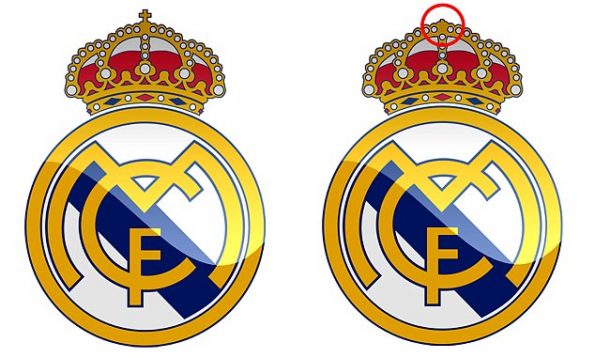
With regard to the subject of the use of religious symbols in trademarks, the case of the Spanish football team, Real Madrid, is illustrative of the importance that religious symbols may have in certain contexts. The team removed a Christian cross from its official crest for specific projects, such as the negotiations regarding a Real Madrid-themed island resort in the United Arab Emirates and the launch of an officially-licensed credit card issued by the National Bank of Abu Dhabi. In both cases, the change in the traditional crest was made in an attempt to please Muslim supporters of the world’s wealthiest football team.[17]
While some companies deliberately avoid offending potential customers (like the owners of the marks ISIS for chocolate[18] and MITSUBISHI PAJERO for cars[19], which realized that their marks could be offensive in certain circumstances and decided to rebrand), other companies intentionally opt for controversial marks, aiming at gaining consumers or media attention through controversy. In the “era of overwhelmed and distracted consumers”, “it is increasingly common to encounter indecent trademarks or marks that deliberately cross a line”, with the goal of getting attention (like COCK SUCKER for rooster-shaped chocolate lollipops and SLUTMAGNET for musical group services and shirts).[20] Enrico Bonadio addresses the issue of using controversial marks as a marketing tool:
“Not rarely, companies adopt debatable trademarks for “shock value” in order to win consumer’s attention and eventually increase their market share. In other terms, enterprises may be attracted by the commercial success they can gain from edgy and controversial brands or borderline trademarks, which make the latter more memorable, more discussed, and accordingly more appealing and valuable to consumers”.[21]
In an American case involving a pornographic website, fuckingmachines.com, an administrative decision recognized that “[w]hile the word ‘fucking’ may not elicit widespread condemnation from everyone, it is clear from the evidence attached that a significant composite of the public still feels a jolt of offense, shock, or dismay when they overhear the word uttered in public.”[22] Meanwhile, even though the mark owner ultimately lost its bid for registration before the USPTO, the administrative proceeding itself gained widespread notoriety.[23]
In light of the above, and considering that trademarks are crucial commercial assets, it is of great importance to examine the registrability of the “immoral” marks as well as their scope of protection. Carrying out a business activity under an unregistered mark may involve certain risks that owners of potentially immoral marks should be aware of before operating in the market.
II. The Essence Of Morality And Its Connection To Trademark Law
The essence of morality and the theories that define it, as we will explore in the coming paragraphs, is the key to understanding its application in trademark law. The Morality Clause included each country’s national legislation only mentions the notion of morality, but it does not specify the theories, nature or principles that form the basis for this concept. Therefore, before analyzing the application of the morality impediment for the registration of trademarks, it is important to discuss the nature and significance of morality.[24] What can be considered moral or immoral? The Oxford English Dictionary provides a definition that comprises various elements that should be explored. Accordingly, morality is “a degree of conformity to moral principles; that which includes the totality of the accepted norms which are deeply rooted in a particular culture.”[25] In our interpretation, morality can refer to what one should and should not do, taking into account virtues, values, principles, the bad, the good, the right, and the wrong.[26] By this standard, actions considered moral should be praised and actions considered immoral should be prevented and/or punished, but any assertion of morality must also contain a proper measure of legitimacy. Without it, restricting commercial activity and withholding a government benefit becomes a mere (unjustified) exercise of arbitrariness on the part of the state.
The first important aspect of the above mentioned definition is the “degree of conformity to moral principles.”[27] The issue here is assessing which are these moral principles. For Aristotle, such principles come from the essence of the human being; they are strictly connected with the mere fact of existing.[28] The above definition also mentions “a particular culture,” referring to “accepted norms which are deeply rooted in a particular culture.”[29] The notion of a particular culture/society relates to a group of persons that share the same land, background, ethnicity, language, values, and many other characteristics that give those individuals a sense of relatedness between them and the country or region they are part of.
The people of South America may have borders between them, but they are very related. The continent is linguistically diverse, with Spanish being the most dominant, Portuguese spoken in Brazil, and Dutch, French, and English used in the Guyanas and Surinam.[30] Bolivia, Peru, Northern Chile, Argentina, Southern Colombia, and Ecuador are home to approximately thirteen million Quechua speakers.[31] Paraguay is generally thought of as a Spanish speaking country, but Guaraní is its co-official linguistic partner.[32] Meanwhile Bolivia, Peru, and Chile have large numbers of Aymara speakers,[33] and Southern Chile and Argentina are home to Mapudungun.[34] There are also countless less popular languages spoken across the continent, both indigenous and imported.[35] This linguistic diversity only scratches the surface, with cultural groups spanning across borders and interweaving with linguistic groups, through urban and rural areas alike. While North Americans tend to vaguely view South America as one large former Iberian colony,[36] the cultural texture is even richer than the linguistic. The continent melds Amazonian, indigenous, African, and European influences from the Patagonian Welsh to the Yanomami groups in Northern Brazil.[37] Nevertheless, despite the geographic, linguistic, political and cultural diversity, South Americans share a common sense of affiliation.[38]
In light of this broad diversity coupled with a common identity, we should analyze the theoretical role of the state, taking into consideration the Trademark Offices and the Judicial Power. According to Plato, society is a fragile unity that needs to have set rules in order to have harmony and peace among its members.[39] The platonic theory supports the view that the State exists to promote value amongst its citizens,[40] basically stating that it is the duty of the State to dictate which standards of morality have to be considered in determining if an action is moral or immoral, right or wrong. This idea of the need for protection is consistent with that espoused by Bentham, who described morality as a set of rules leading to the most favorable social welfare.[41] The system must be administered by a central government because the mere existence and creation of a central government is intimately tied with the search for the welfare of the whole society.
These related statements by Plato and Bentham provide theoretical support as to why we believe that moral judgments are applied to legal decision-making in order to maintain public order. Applying Bentham’s theory, the State, from administrative offices to judges, should be responsible for determining the standards of morality and applying these standards to legal decisions.[42] Furthermore, moral sentiments are part of trademark laws because the ethical approaches of each society have shaped trademark law and have determined the outcomes of decisions.
We could say that entities that deliver judgments are composed of humans, and these, by their own nature, make decisions based on personal moral concerns, which do not consistently overlap with state-based justification. This is true for most individuals, even for judges and examiners. Moral sentiments play a role in trademark laws, and examiners and judges have used notions of morality (such as sexual, religious, or cultural approaches) to pick losers and winners in trademark applications and disputes. This paper will analyze how moral standards have been employed in South American case law and the interpretation given to what is considered moral and immoral from a “relatedness” Latino point of view. This paper will also analyze when notions of “morality” have legitimacy, and when a more permissive view would be superior.
III. Morality as a Ground for Refusal of Registration of Trademarks
Although each of the countries studied in this work have their own prohibitions on the registration of immoral trademarks, the prohibitions did not develop organically, nor in a vacuum. The first legislative prohibition of the registration of immoral marks appeared as early as the 19th century[43], and today, this “morality impediment” appears in most national laws protecting trademarks worldwide[44], as well as in international and regional IP treaties.
The Paris Convention and the TRIPS Agreement provide the right for member states to deny registration if the marks are “contrary to morality or public order.”[45] With regards to the Paris Convention (whose substantive provisions were incorporated by reference in the TRIPS Agreement), the reference to “morality or public order” comes from Article 6quinquies. The Article, in its entirety, allows for prohibition of marks:
“When [the marks] are contrary to morality or public order and, in particular, of such a nature as to deceive the public. It is understood that a mark may not be considered contrary to public order for the sole reason that it does not conform to a provision of the legislation on marks, except if such provision itself relates to public order.” [46]
It would seem that Article 6quinquies grants some textual support to prohibitions on registration to marks based on immorality, but it seems that the text of that provision requires something more than peering at the mark with Victorian spectacles and stating, “[T]his will not do!”[47] The immorality spoken of in Article 6quinquies appears to be directed toward immorality based on deception or its tendency to cause public disorder.[48] Accordingly, marks that are merely deemed “distasteful” would be unlikely to cause public disorder, as they do not implicate the concerns of Article 6quinquies.[49] Meanwhile, marks that insult or attack a particular ethnic or religious group are more likely to cause actual public disorder.[50] In fact, even Pope Francis, of Argentina, famously said that he could be provoked to violence, if sufficiently offended.[51] The Pope admitting to this possibility makes it even more foreseeable that those who are less enlightened than the Bishop of Rome would be so stirred. When the potential insult-violence chain involves larger groups, the potential is even greater.[52]
Based on the aforementioned introductory grounds, we should examine when morality based impediments to registration would be most legitimate and properly applied.[53] The vast majority of decisions and legal analysis on this issue come from the developed world (mainly the United States and Europe).[54] In fact, the United States is presently the stage for the most well-known dispute over a “disparaging” trademark, i.e. the one involving the Washington Redskins.[55] Nevertheless, the number of morality-determination cases has increased in South America over the past few decades, and South American scholars are understandably confronting the issue on a philosophical level.[56] Therefore, the present analysis will mainly focus on the practices of said countries – with an eye toward South America – and, hopefully, it will be useful for the further examination of South American cases (section IV, infra).
Most decisions on trademark cases carry some subjectivity, but in the morality field, subjectivity usually plays an outsized role.[57] Notions of morality may change depending on time, place, and culture.[58] Trademark examiners and judges of different social, religious, and political backgrounds have a say on the (im)moral character of trademarks. Because each examiner/judge views the world in a certain way[59], it is common to have varying decisions on similar cases.[60] Therefore, decisions should avoid the examiner’s personal views in favor of common logic and application of neutral rules.
The rationale supporting morality-based restrictions has two aspects: (i) the problem with an act of the state granting protection for an immoral mark and (ii) the desire to protect consumers from exposure to such marks. With regards to the first aspect of the rationale, Stephen R. Baird offered a “state imprimatur” theory as follows: “Section 2(a) prevents the government from placing its imprimatur on [scandalous or immoral] marks and denies the statutory benefits that would otherwise result from their federal registration.”[61]
The second aspect of the rationale refers to the commercial display of an immoral sign and the consumers’ exposure to it.[62] The prohibition of registration aims at discouraging businesses from using said marks in the market.[63] By prohibiting registration and leaving a possible protection over these signs to the field of unfair competition, governments intend to indirectly combat the use of immoral marks[64] and thus protect consumers from exposure to such signs and the market from “disorder” that could be caused by such exposure.
The morality-based restriction is an absolute basis for the refusal of a trademark. It does not matter if the mark is composed only of the offensive sign, or if the offensive sign is associated with other non-offensive elements (words, designs, etc.). If there is offensiveness, the trademark may be rejected.[65] Even though the non-offensive elements may somehow “dilute” the consumers’ perception of the offensive element, there will still be a likelihood of offense. As long as the sign can be perceived as offensive by consumers, it should not receive the benefits of trademark registration.[66]
The main issue of assessing when a trademark may be offensive is to what extent it would cause disorder. However, this is often interpreted as whether it would cause a consumer to blush.[67] The system legitimately aims at preventing the registration of marks that might actually offend consumers’ values, and not marks that can simply be considered “distasteful” or “inappropriate,” but that aim is not always completely accurate. While reviewing an application for the mark TINY PENIS to cover clothing articles, the United Kingdom Intellectual Property Office (UK IPO) mentioned that the examiner should distinguish between offense which simply amounts to distaste, and offense which could cause real outrage or be the subject of justifiable censure as being likely to harm accepted principles of morality[68].
In order to verify if a trademark might cause real outrage, one must determine how the mark is or will be perceived by the public. Some terms may have more than one meaning – non-offensive v. offensive – and, especially in the case of word marks (which do not have a logo to help in the construction of the idea intended by the trademark holder), it is crucial to determine which meaning would be assimilated by the public. If the non-offensive meaning is more relevant than the offensive one (in the consumers’ perception), the morality restriction should not apply.[69]
In 1972, the United States Patent and Trademark Office (USPTO) granted registration for the mark ACAPULCO GOLD, which is a slang term for marijuana, finding that said expression would likely evoke in consumers’ minds the city of Acapulco, Mexico, rather than the illegal drug.[70] The USPTO took into consideration the fact that the application covered suntan lotions so as to determine that the mark referred to the Mexican city. [71] In a similar case, the USPTO allowed the registration for MILF COSMETICS MOMS INTENT ON LOOKING FABULOUS covering cosmetic products.[72] Although “MILF” may be understood as the acronym for an “offensive” expression (“Mother I’d Like (to) Fuck”), the Examiner concluded that in this case, the acronym refers to a different expression (“Moms Intent on Looking Fabulous”), and also considered that the products connected to the mark would give consumers the impression that the mark would have its “non-offensive” meaning.[73] In the UK, the mark FCUK (the acronym for the UK clothing company French Connection) was accepted on the grounds that, even though it was arguably capable of being seen as the swear word “Fuck,” it does not always evoke said word in consumers’ minds.[74]
Moreover, the offensive character of a mark may be verified when analyzing the sign per se (i.e., without considering the goods or services covered) or in association with the respective goods and services. In our view, examiners/judges should first determine if the mark is offensive per se and, if not, determine if there is offensiveness resulting from the combination of the mark with the goods/services applied for. As examples of marks that were considered offensive per se, one may cite the cases of the marks MADONNA in Switzerland[75] and BULLSHIT in the United States.[76] On the other hand, the following marks were deemed immoral in the United States because of the association of the signs with the relevant products or services: the mark MADONNA for wines (similar to the Swiss decision, the court concluded that MADONNA refers to the Virgin Mary and that a substantial part of the public—back when the case was examined in the 1930s—–would be scandalized by the idea of the Virgin Mary on a bottle behind a bar)[77]; the mark SENUSSI for cigarettes (SENUSSI is the name of a Muslim sect that forbids the use of tobacco)[78]; and the mark DOUGH-BOY for pharmaceutical preparations against venereal diseases (DOUGHBOY was an informal term for a member of the U.S. Army or Marine Corps).[79]
One of the most important issues on the assessment of the immoral character of a trademark refers to the portion of the public that should be considered by the examiner or judge.[80] In other words, which part of the public should be protected by the morality-based restriction; the public in general, the people that are likely to be exposed to the mark, or the consumers of the specific product/service (marketplace)?
The European Union Intellectual Property Office (EUIPO) addresses this issue in a way that seems the most appropriate. The Guidelines For Examination Of European Union Trade Marks deals with the concepts of marketplace/target consumer versus “people that are likely to be exposed to the mark” to conclude that the latter is the correct threshold for this examination:
“Although the Court has held that the goods and services for which protection is sought are important for identifying the relevant public whose perception needs to be examined, it has also made it clear that the relevant public is not necessarily only that which buys the goods and services covered by the mark, since a broader public than just the consumers targeted may encounter the mark (judgment of 05/10/2011, T-526/09, ‘PAKI’, § 17-18 respectively). Accordingly, the commercial context of a mark, in the sense of the public targeted by the goods and services, is not always the determining factor in whether that mark would breach accepted principles of morality (judgments of 09/03/2012, T-417/10, ‘¡Que buenu ye! HIJOPUTA’, § 24; 26/09/2014, T-266/13 ‘Curve’ § 18-19).” [81]
While the “general public” option may be too broad and thus unjustifiably restrictive for trademark holders,[82] the “marketplace” option, on the other hand, may fail in protecting a part of the public which will likely be exposed to the offensive sign.[83] Therefore, the assessment should be carried out within the part of the public that might be exposed to the mark (which may be strictly limited to the targeted marketplace or may even reach the public in general, depending on the nature of the product or service).
The German Federal Court of Justice in the aforementioned READY TO FUCK case supports this position (Bundesgerichtshof, I ZB 89/11 of October 2nd, 2012) . It explained that, with regards to the morality impediment, the court should base its decision not only on the view of the consumers that were targeted by the trademark holder, but also on the view of the parts of the public that could encounter the mark in everyday life.[84]
The SCREW YOU case in the EUIPO is another good example of the argument this study is trying to build.[85] In this case, the applicant tried to protect its mark for products like sunglasses, footwear, clothing and alcoholic beverages, but also for less common goods, such as condoms, contraceptives and sex toys. The EUIPO made a distinction between these two groups of products and, considering the part of the public that would be exposed to each of them (“general public” versus “marketplace”), it denied registration for the frequent and common goods (sunglasses, footwear, clothing and alcoholic beverages) and granted registration for the less common goods (condoms, contraceptives and sex toys). The Grand Board of the EUIPO noted that the less common goods are usually commercialized in sex shops and the relevant consuming public is unlikely to be scandalized or offended by the use of SCREW YOU as a trademark.[86]
Finally, it is important to briefly cover the fluidity of the concept of morality in relation to place and time. It seems uncontroversial that, in relation to place, the offensive character of the mark should be viewed in the context of “the country where protection is claimed.”[87] In the aforementioned case of the mark MADONNA in Switzerland, the court held that morality is shaped by particular circumstances, including the linguistic perception of the relevant country.[88]
With regard to time, it is important to emphasize that the notion of morality is dynamic and constantly changing; words that were considered contrary to morality in the past may now be morally acceptable.[89] As stated by the USPTO, in the decision that reversed the refusal of the mark OLD GLORY CONDOM CORP (featuring a design of a condom decorated as the American flag):
“[…] what was considered scandalous as a trademark or service mark twenty, thirty or fifty years ago may no longer be considered so, given the changes in societal attitudes. Marks once thought scandalous may now be thought merely humorous (or even quaint) […]”.[90]
The assessment of immorality should be made in accordance with contemporary attitudes, taking into account the current values of society.[91] However, for the purpose of the examination of a trademark application, it is necessary to determine a specific date in which the conformity of the mark with moral standards should be verified; and said date should be the date of filing of the application. As provided by Jérrome Passa: L’appréciation, qui releve du pouvoir souverain des juges du fond, doit être menée en se plaçant au jour de dépot, même si la conception de l’ordre public ou des bonnes moeurs a évolué. [92]
In a decision concerning the mark HALLELUJAH for clothing articles in the UK, the hearing officer held that “it is well established that the registrability of a trade mark must be judged as at the date of its application. I conclude that the phrase ‘contrary to morality’ falls to be considered by the generally accepted standards of today and not by those of 1938.”[93]
IV. Application And Practice In South American Countries
A) Brazil[94]
Among the countries analyzed, Brazil is the one that has the largest number of cases involving rejections of registration on the basis of immorality.[95] It is possible to identify cases falling in all of the four categories mentioned in the Introduction of this study, i.e. reference to sexuality or vulgarity, offense to religions or respectable beliefs, offense to the honor of a person or a group of persons, and reference to an illegality. After review of the cases (some of which are mentioned below), we have concluded that, in general, Brazil adopts a more conservative approach in relation to morality-based impediments.
This conservative position should be criticized because, in our opinion, IP Offices and courts should be neither too conservative, nor too liberal, when it comes to morality restrictions; in fact, moderation is the most justifiable and supportable path.
In some cases, this conservative position has ultimately led the Brazilian IP Office (INPI) to issue rejecting decisions based solely on the particular examiner’s personal “view of the world.”[96] The issue here refers to the refusal of trademarks in which offensiveness was “in the eye of the examiner,” and not in the actual signs under examination. For example, the INPI refused an application for PEACE AND LOVE!!! TRIP covering paper for cigarettes and tobacco on the grounds that “the expression ‘peace and love’ is commonly used by hippies […]. Amongst the characteristics associated to hippies is the consumption of drugs such as marijuana, hashish and hallucinogens, like LSD, in an attempt to ‘free their minds’, given their iconoclast and illicit nature.”[97] In light of this, the examiner concluded that PEACE AND LOVE!!! TRIP is contrary to Brazilian morality.[98]
Similar reasoning was adopted in the case of the mark REGGAE IN BAHIA[99] covering clothing articles and featuring the image of reggae musicians performing and smoking unidentifiable cigarettes, as follows:
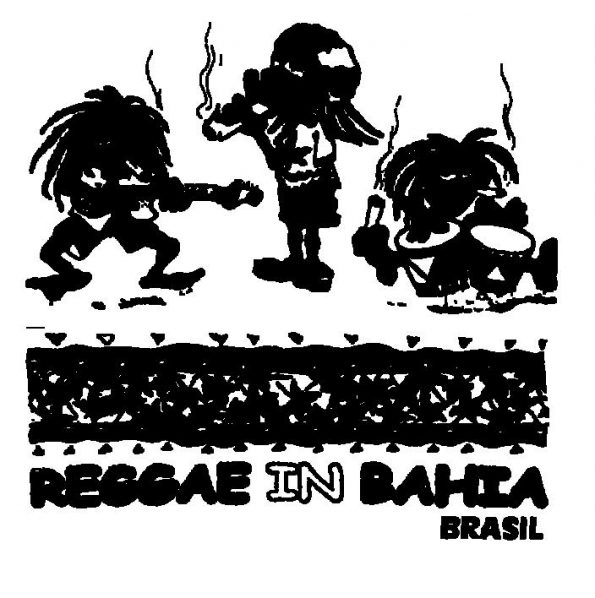
The examiner understood that the context of the sign refers to the use of an illicit drug (probably marijuana).[100] In view of the “strong indication of reference to a forbidden narcotic substance,” the examiner concluded that the above mark – which does not bear any kind of offensiveness in its word elements – would be contrary to accepted principles of morality.[101]
The decisions on PEACE AND LOVE!!! TRIP and REGGAE IN BAHIA were directly (and maybe exclusively) influenced by the examiner’s personal and conservative views on hippies and reggae musicians smoking cigarettes and did not necessarily reflect the public’s view on such marks.
Further examples are the cases of the marks BIOFORM IMPLANTE for prostheses and CATUABA EXÓTICA for beverages, as per the images below [102]:
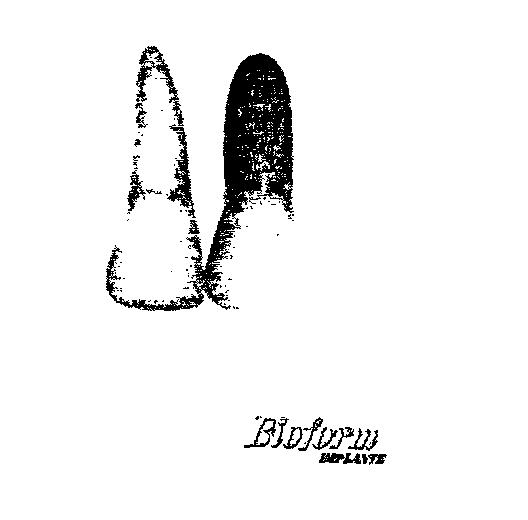
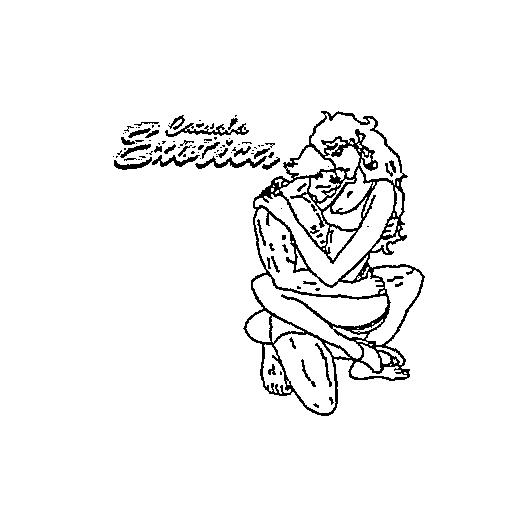
The first sign lacks any outward trace of obscenity or immorality. The examiner may have considered that the depicted objects have a phallic shape,[103] but the image clearly refers to dental prostheses. The mark owner is perhaps an intellectual property hostage of the examiner’s imagination. As for the second mark, the application was refused by the first instance of the INPI, but the refusal was overturned by the second instance.[104] The second instance noted that the couple depicted in the image is not naked, and the image shows an act of caress, rather than sexual intercourse.[105]
In sum, the decisions regarding PEACE AND LOVE!!! TRIP, REGGAE IN BAHIA, BIOFORM IMPLANTE and CATUABA EXÓTICA (specifically the first instance decisions) did not consider the actual meaning that the marks would convey to the public, but rather were rendered based upon the personal beliefs, and in some cases, the wild imaginations of the examiners.
The INPI’s conservative nature is also revealed by the refusal to approve of the following marks: BANDA PEITO DE MOÇA (Portuguese for “Lady’s Breast Band”) for music band and entertainment services[106]; COO’S[107] for clothing articles[108]; BUTTOCK for clothing articles[109] and BUNDAS (Portuguese for “Buttock” or “Butt”) for periodic publications[110] ; DIVINO ESPÍRITO SANTO (Portuguese for “Divine Holy Spirit”) for alcoholic beverages[111]; EM NOME DO SANTO (Portuguese for “In The Name Of The Saint”) featuring a design of Christ’s face and covering bar and restaurant services[112]; CHEFE DE QUADRILHA (Portuguese for “Gang Leader”) for clothing articles[113] [114]; and CLANDESTINA (Portuguese for “Clandestine”) for beverages.[115] Also with respect to this issue, it is interesting to note that the INPI recently rejected an application for LEGALIZE[116] featuring the design below and covering clothing articles:
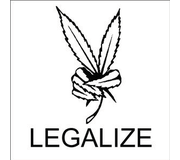
This design refers to the cannabis leaf, and the examiner likely rejected this application due to the illicit character of cannabis/marijuana in Brazil[117]. However, a more cautious analysis of the case reveals that this sign does not necessarily stimulate or encourage people to use or commercialize the illicit substance. Rather, it seems to constitute political speech advocating for marijuana legalization.[118] In this context, one should ask two questions: what is offensive about advocating for political change and is it legitimate for the INPI to refuse registration for a sign that merely advocates for a particular political cause? In our view, the aforementioned sign is not actually offensive for the public, and the refusal issued by the INPI may ultimately be understood as censorship of freedom of expression.[119]
Apart from the conservative position mentioned above, there are several cases in which the INPI more justifiably refused applications for offensive marks,[120] as well as some cases in which a more liberal approach was adopted. With regards to the latter situation, the INPI did accept some applications for marks, which, at first sight, could be understood as offensive, but were correctly considered to be consistent with the current principles of morality.
For example, the INPI accepted applications for DR. PENETRATION for discs and tapes and advertisement, photographic and cinematographic services[121], SUCK MY DISCS for discs and tapes[122], several BUTT-formative marks, and MAFIA MARINGAENSE[123]. Additionally, one may cite the cases of some “cachaça”[124] marks like RABO QUENTE (Portuguese for “Hot Tail”), SÁ CANA (a reference to the word “Sacana,” which means “Naughty” or “Filthy”) and DUPIRU (in which the term “Piru” may refer either to a turkey[125] or to a penis),[126] bearing in mind that it is common in Brazil to use irreverent expressions in relation to such products, there being sometimes more flexibility with regards to the morality impediment in this market segment.[127]
Similar to Brazil, a review of cases in Peru demonstrates that the Intellectual Property Office from this country (INDECOPI) is generally conservative in relation to morality-based impediments to registration. It is important to mention that INDECOPI’s decisions are usually more extensive and well-grounded than the decisions from Brazil or any other South American country we analyzed in our review.
Just like in the first Brazilian cases described above,[129] we believe the conservative approach of the INDECOPI may lead to refusals based solely on the “view of the world” of the assigned examiner, i.e. where the offensiveness is “in the eye of the examiner” and not in the actual sign under examination. An example would be the refusal of the application for ADULT EDUCATION A[130], featuring the logo below and covering clothing articles:

The INDECOPI sexualized a simple letter A in this case, and if the reader struggles to anthropomorphize the pictogram, one can possibly let the mind wander to a hieroglyphic rendition of a sexual act. Furthermore, our opinion is that perhaps the expression “Adult Education” would contribute to the perception of a sexual act by the public. In conclusion, INDECOPI decided that this sign “is susceptible of directly hurting the sensibility of certain sectors of the society, who will classify it as a sign that is against the good manners”.[131]
One of the most relevant Peruvian cases regarding morality-based impediments also demonstrates a conservative position. This case relates to the refusal of the mark EL PEZWEON[132] featuring the logo below and covering clothing articles:
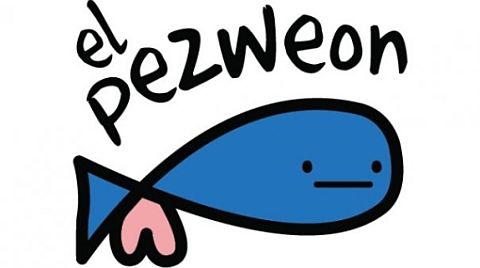
INDECOPI understood that, even though “pez” (which means “fish” in Spanish) is not an offensive term, “weon” is an expression of colloquial language, which means “lazy, idiot or moron.”[133] According to the Office, the latter is an inappropriate expression that is used to disqualify people in a rude manner.[134] Furthermore, INDECOPI also mentioned the fact that the fish design displays male gonads, which could be scandalous to a section of society.[135]
The applicant challenged INDECOPI’s decision by arguing that: (a) PEZWEON stems from the common Peruvian jargon “pues weon,” which can be translated as “come on dude”; (b) the PEZWEON mark is widely accepted by the public, as may be seen from the selling of t-shirts, stickers, postcards, other merchandise, and even a book called “Las Aventuras del Pezweon” (“The Adventures of Pezweon”); (c) the mark is broadly advertised in social media, with more than 27,000 fans on Facebook; and (d) PEZWEON is a copyrighted work granted by INDECOPI.[136] These arguments did not change INDECOPI’s initial decision, and it denied the registration of this mark for a second time.[137]
The fact that the public is widely familiar with the PEZWEON character and logo (which is demonstrated by the merchandise demand, increasing number of Facebook followers, and the high selling numbers of the aforementioned book) is a strong indication that the mark in question might not be offensive to a substantial composite of the purchasing public.[138] Furthermore, the people exposed to the mark frequently uses the “pues weon” colloquialism, which minimizes the possibility of feeling offended by said mark. Therefore, INDECOPI’s position on this matter seems to be untethered from the facts.
It is also worth mentioning the refusal of three applications comprising the term CARAJO: DEL CARAJO for musical events and restaurant services and CARAJO for food products.[139] The allegedly offensive word here – CARAJO – may have more than one meaning, non-offensive v. offensive. In all these cases, the INDECOPI itself acknowledged that CARAJO might be used, not as a term of displeasure or nuisance, but as a positive indication of something special or interesting.[140] For example, something satisfactory or enjoyable can be referred to as “Del Carajo,” and the phrase “Viva El Perú Carajo” is used by a significant portion of the population as a way to express pride in being a Peruvian national.[141] However, the Office further mentioned that CARAJO might also be an inappropriate word and a rude way to demonstrate irritation, discomfort, and the like.[142] Considering the products and services applied for, which according to the INDECOPI could be available to children, the Office decided to take an overly cautious, paternalistic approach and therefore rejected the applications.[143]
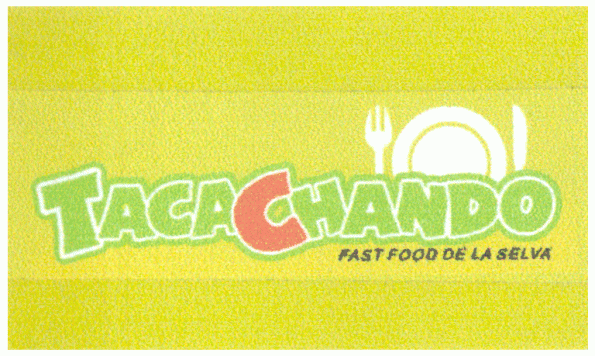
The conservative position of the INDECOPI can also be portrayed through the refusal of the following marks: SEXO (Spanish for “Sex”) displayed on clothing articles and featuring a design of this word along two contrary-facing pairs of feet that reenact a sexual act; EL TROLO (Peruvian colloquialism for “Male Member”) for paper products and magazines; and TACACHANDO (Peruvian colloquialism for “Having Sex”) for bar and restaurant services.[144] This last decision is one of the most conservative ones, since the figurative elements of the sign make a clear reference to the restaurant services it intends to protect, referring to a typical dish called “tacacho” (as per the image below), and not to a sexual act:[145]
Apart from the conservative position mentioned above, we identified a case in which the INDECOPI correctly denied registration for an offensive mark,[146] as well as some cases in which a more liberal approach has been adopted. With regard to the latter situation, the INDECOPI did accept some applications for marks, which, at first sight, could be understood as offensive, but were correctly considered in compliance with the current principles of morality. For example, the INDECOPI accepted applications for PEÑA DEL CARAJO! JUERGA PERUANA covering entertainment services (which represented a switch in INDECOPI’s position in relation to the word CARAJO)[147] and ASB ANOTHER STUPID BRAND covering t-shirts and shoes.[148]
C) Ecuador
As we will portray in the next paragraphs, the morality impediment in Ecuador does not seem as heavily contested as in Brazil and Peru.[149] Many applications that could have been rejected based on the morality restriction were simply rejected on other grounds, such as lack of distinctiveness.[150] However, from the cases reviewed, it is possible for us to conclude that Ecuador also tends to adopt a conservative approach in relation to this matter, but relies upon other justifications for rejection, rather than confronting the inherent challenges in a morality based rejection. The conservative position of the Ecuadorian IP Office (IEPI) might be exemplified by the refusal of applications for the mark MAMA-ADITA (as it may sound like the Spanish word “mamadita,” which can be translated into English as “blowjob”) for alcoholic beverages and the trade name MIL-HUEVADAS (which can be translated into English as “One Thousand-Bullshit”).[151]
Beyond simple morality issues, two Ecuadorian cases highlight how the “morality” clause comes into play in cases of racism and social controversy. The first case refers to 60 active trademarks in several classes for MENESTRAS DEL NEGRO in the name of Grupo KFC del Ecuador. This mark is widely known by the Ecuadorian public, identifying a popular national fast food chain.
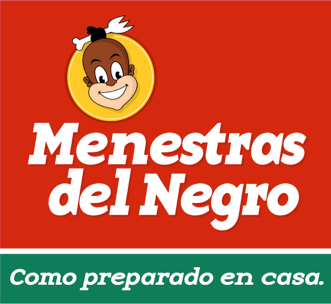
The expression MENESTRAS DEL NEGRO can be translated into English as “The Black Guy’s Stew” and, together with its logo, may lead to the conclusion that the food produced by this restaurant is made by and for black people. As mentioned in Section III above, one of the aspects of the rationale of the morality-based impediment is to protect consumers from exposure to offensive marks. A black person, portrayed with a bone tied to his head like an aborigine, might be considered racist, and thus immoral, if we apply the rationale behind the Redskins case in the United States[152], which was recently obviated by the U.S. Supreme Court decision in Matal v. Tam.[153] In the Redskins case, six trademarks were cancelled because the USPTO found that the registration of a trademark could be refused if a certain group of people (in this case Native Americans) find the mark to be disparaging, and the USPTO decision was initially affirmed by a U.S. District Judge.[154] The ruling in Matal v. Tam obviates the Pro-Football decision because the U.S. Supreme Court declared that the disparagement clause of Section 2(a) of the Lanham Act is unconstitutional.[155] As for the Ecuadorian case, the trademark might encourage racial discrimination against the Afroecuadorian population,[156] but as of now, contrary to the Redskins case in the US, there have been no manifestations against this trademark; thus, no judge has considered this trademark as being officially immoral or offensive.
The second case refers to the pending application for CRUDO ECUADOR, where CRUDO means being blatantly direct and honest, without filters.[157] CRUDO ECUADOR is a Facebook page that has over 6000,000 followers and was deemed a public enemy of the State for openly criticizing and mocking Mr. Rafael Correa, former president of Ecuador, and also because of the “media lynching” concept mentioned in Ecuador’s Communication Law,[158] for which the offender could be penalized by law.[159]
In this case, it seems clear that the mark CRUDO ECUADOR is not offensive per se or when applied to the services it identifies. Therefore, there is no reason for rejecting the mark based on the morality restriction, as it has no particular meaning and is not offensive to Ecuadorian consumers. However, Mr. Correa’s moral rights, created by the inception of the Communication Law and the Criminal Code, can provide a legal argument for possible refusal of the mark by the IEPI.[160]
D) Argentina[161]
Argentina also tends to be somewhat conservative with respect to morality-based impediments to trademark registration. Sergio M. Ellmann mentions that one of the most prominent cases in this field dates back from the 1940s, when an application for the mark LOS BORRACHOS (Spanish for “The Drunkards”) for beverages was refused because it referred to “a vice doubtlessly spurned by society.” [162]
There have been many recent cases in which a rigorous and conservative approach was adopted by the Argentinean IP Office (INPI), leading to the refusal of the marks: EL HIMNO A LA CONCHA[163] (the word CONCHA in Argentina means “vagina”); PIS Y CACA[164] (colloquial Spanish for “pee and poop”); POLICIA CORRUPTA[165] (Spanish for “Corrupt Police”); CYBER CARAJO[166]; and DE LOS COJONES (the word COJONES in Spanish means male testicles).[167] On this topic, we would like to call the reader’s attention to the refusal of applications for BUENOS AIRES ES GAY (“Buenos Aires Is Gay”) and ARGENTINA ES GAY (“Argentina Is Gay”), covering services in classes 35 and 38.[168] These last decisions lead us to enquire if the INPI considers that a sexual preference can represent an offense to the public, especially in the city of Buenos Aires, widely known as the “Latin American paradise for gay tourism.”[169]
In spite of the above, we identified a “more liberal” position in the Argentinean courts. For example, consider the case of the mark BILLY BOY, covering condoms and featuring a stylized phallic shape logo[170].
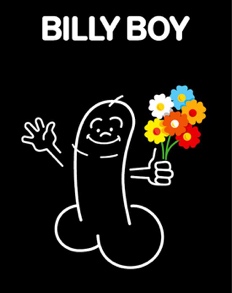
The application for BILLY BOY was rejected by the INPI based on the argument that the logo is contrary to accepted principles of morality.[171] However, the National Court of Appeals for Civil and Commercial Matters in the city of Buenos Aires later overturned this decision by claiming that sex is no longer considered taboo in today’s society, and therefore, a less restrictive approach to determining what is immoral/obscene could be applied in this case.[172] In his vote, Judge James Bernard Kiernan said, “the criterion for obscenity is confusing and imprecise,” and sex is a globalized subject in the present as it has a “broad educational and social treatment.”[173] The magistrate concluded that the logo in question “raises no sexual thoughts or desires beyond the natural, organic and convenience of using a condom for obvious reasons of prevention of venereal diseases and AIDS.”[174] In this sense, the drawing was considered reasonable for a mark identifying only condoms (in line with the SCREW YOU decision in the EU).[175]
E) Colombia[176]
Our research did not encounter a large number of cases dealing with morality-based impediments in Colombia. However, from the cases reviewed, it is possible to conclude that Colombia also tends to adopt a conservative approach in relation to this matter. Perhaps the most famous Colombian cases regarding the morality restriction refer to the marks consisting of the name of a well-known drug dealer, Pablo Escobar. According to Gq Magazine, Escobar is said to have been “responsible for approximately 4,000 deaths, including a Colombian presidential candidate, and, at the height of his career, he was responsible for 80% of the cocaine smuggled into the United States”.[177] Also, he is considered the wealthiest criminal in history, with an estimated net worth of $30 billion by the early 1990s.[178]
In 2011, Escobar’s widow and sons filed an application for PABLO EMILIO ESCOBAR GAVIRIA (Escobar’s full name), covering several entertainment/cultural services in class 41, such as production of radio and television programs, exhibitions, publication of books, etc.[179] This application was rejected by the first instance of the Colombian IP Office (SIC) based on the morality impediment, and, in view of an appeal filed by the applicants, it was reexamined by the second instance of the SIC, which upheld the previous decision.[180] The SIC mentioned that: “[t]he name is associated with a violent period in the country during the 80s and part of the 90s, which made thousands of victims, and is remembered as ‘the most important drug dealer of all time.’”[181]
The above decision reaffirmed the understanding set forth in an earlier case regarding the mark PABLO ESCOBAR in class 35.[182] In 2005, Escobar’s sister filed an application for this mark covering similar services as the ones in class 41 (namely, marketing; audiovisual use, printed and editorial use, marks, telecommunications, commercial use [existing or to be created]), which was also rejected by the SIC on morality grounds.[183]
These decisions display the conservative position of the SIC, as the SIC did not correctly analyze the applications in light of the services covered. There should be no offensiveness in using the name PABLO ESCOBAR for a television program or biography, or using “PABLO EMILIO ESCOBAR GAVIRIA” as the name of an exhibition about his life. Considering the services applied for, the public would likely not perceive the marks as some sort of “tribute” to Pablo Escobar or his illegal activities, meaning there would be no potential for offense. A different situation could occur if a PABLO ESCOBAR mark identified other products or services, such as clothing articles or sports equipment.[184] In this case, the reference to Escobar might convey approval of his actions or even the encouragement of violence and drug dealing.
Additional examples of the conservative position of the SIC include the refusal of applications for CRISTO REY (Spanish for “Christ the King”) for food products in classes 29, 30, and 31, and DIVINO NIÑO (Spanish for “Divine Child,” in a reference to the Baby Jesus) for alcoholic beverages in class 33.[185] In both cases, the SIC concluded the marks are offensive per se (without the need to consider the goods or services applied for) because, in view of the meanings of expressions CRISTO REY and DIVINO NIÑO, for the Catholic population of Colombia, they should not be exclusively appropriated by any party.[186] In the CRISTO REY case, the SIC further claimed the offensive character of the mark also relates to its figurative element (depicted below), comprising a cross beside a mountain, which could lead to a reference of the death of Jesus Christ.[187]

In the DIVINO NIÑO case, the SIC also mentioned that the mark covers alcoholic beverages to justify its decision (even though it had previously stated the mark is offensive per se).[188] According to the SIC, since the abuse of alcoholic beverages can cause serious social and health problems for consumers, branding such a product with a Catholic symbol would be offensive to Catholics.[189]
Apart from the conservative position mentioned above, there are some cases in which a more liberal approach has been adopted in Colombia. The SIC did accept some applications for marks which, at first sight, could be seen as offensive, but were correctly considered in compliance with the current principles of morality. For example, the SIC accepted applications for EL CAPO (Spanish expression which means “the gang leader”) for alcoholic beverages and television entertainment services; PUSSY for class 28 products; and PUSSY NATURAL ENERGY for beverages in class 32[190].
Chile is the progressive member of the South American family. The Chilean IP Office (INAPI), in general, accepts applications for trademarks, which, at first sight, could be understood as offensive, but were correctly considered in compliance with the current principles of morality. For example, the INAPI accepted the following marks for registration: CARAJO, EL CARAJO and RESTAURANT DEL CARAJO! COMIDA PERUANA covering olive oil and alcoholic beverages, condiments and food services, respectively[192]; MIERDA, MIERDA, MIERDA (the word MIERDA literally means “shit” in Spanish, but it is commonly used by Chileans to express an idea of intensity) covering communication, educational and entertainment services[193]; VAMOS CHILE MIERDA covering clothing articles[194]; BULLSHIT covering non-alcoholic beverages[195]; EL REY DE LOS HUEVONES (Spanish for “The King of the Idiots/Morons”) for films, entertainment services and restaurants/bars [196] [197]; DE PUTA MADRE 66 and DE PUTA MADRE for clothing articles and food services, respectively[198]; PUTAMADRE ANTIPOETA, BOHEMIO Y REPUBLICANO and BOHEMIO REPUBLICANO Y PUTAMADRE for alcoholic beverages[199]; SEXO SATISFACCION GARANTIZADA? (Spanish for “Sex: Satisfaction Guaranteed?”) for theater plays[200]; MAFIA for clothing articles[201]; MAFIA PRODUCCIONES for services related to TV/radio programs[202]; and MAFIA JEANS in classes 24 and 25.[203]
However, there are cases in which the INAPI, in our view, was too liberal in relation to the morality-based restriction, and these decisions should be criticized, similar to the general conservative position of the previously mentioned countries. The INAPI granted registration for some trademarks that, considering the current principles of morality in Chile, might actually offend the public and therefore should have been rejected. For example, one may cite the registrations for WWW.PORLAPUTA.COM (“POR LA PUTA” means something similar to “By the Whore” in English) for telecommunication services[204]; ¿QUÉ MIERDA REGALO? (Spanish for “What the Fuck Should I Give (as a present)?”) for commercialization services[205] [206]; SHIT FACE and DOPE SHIT for clothing articles[207]; and HEAVY SHIT for the transmission of music, videos and interviews via the Internet[208].
It is important to note that the above-mentioned decisions, which are considered too liberal, might be explained by an orientation set forth in the INAPI’s Guidelines for the Registration of Trademarks, as follows:
“The marks contrary to morality, public order or standards of respectability must be rejected due to the violation of art. 20, k) of Law 19.039. Even though the concepts of morality, public order and standards of respectability do not have a much precise content, it is understood that the marks falling under this prohibition would be marks referring to illegal acts, such as terrorism and common crimes.”[209]
It seems the INAPI restricted the applicability of moral impediments to marks bearing reference to an illegality, instead of signs bearing a sexual/vulgar reference (such as WWW.PORLAPUTA.COM, ¿QUÉ MIERDA REGALO?,SHIT FACE, DOPE SHIT and HEAVY SHIT). In this sense, virtually all of the refusals based on the morality restriction identified in our search relate to marks referring to illegal activity.[210] For example, the INAPI rejected applications for COCAINE for energy drinks and alcoholic beverages[211], KO CAINE for non-alcoholic beverages[212], MARIHUANA for a marketing service[213], MARIJUANA ROCK in class 25[214], and several other CANNABIS-formative marks.[215]
V. Freedom Of Expression Concerns
After reviewing the above cases in South American countries, it is important to address the issues specific to these countries’ decisions on trademarks regarding morality-based restrictions and how they affect freedom of expression. Those who support morality-based restrictions often note a distinction between restrictions on use versus registration.[216] The prohibitions on registration are said to only deprive a mark of the privilege of registration, but not as a prohibition on use, thus discounting freedom of expression concerns.[217] However, the notion that prohibitions on registration but not on use are permissible is not without controversy.
A) Registration vs. Use and Free Expression Concerns
The fact that South American legal systems afford some protection to unregistered marks does not remove the controversy. The South American countries analyzed are civil law jurisdictions and, therefore, the protection of unregistered marks is left to specific provisions, like unfair competition rules.[218] These rules fall far short of granting the broad scope of protection derived from trademark registration.[219] For example, the owner of an unregistered senior mark needs to demonstrate there is actual competition between the parties involved (in relation to time and place), as opposed to merely basing a claim on a property right.[220] Therefore, it is more difficult and burdensome to enforce an unregistered mark than a registered mark, which constitutes a way of discouraging businesses to pursue allegedly offensive marks.[221]
In examining plain packaging of cigarettes under TRIPS, Alberto Alemanno and Enrico Bonadio observed that use and registration of trademarks are inextricably linked.[222] In that study, they observed the opposite of what we see here: that registration without use creates a “hollow formal right which is economically meaningless.”[223] Moreover, it seems that if a state prohibits registration of marks based on morality, and points to Article 6quinquies of the Paris Convention for justification, the state may not be justifying its logic.[224] Alemanno and Bonadio cite to a tobacco industry letter, which states that Article 6quinquies prohibitions “are not motivated by the fact that the registration itself would be problematic, but rather that the use of the trade mark would be”.[225]
This dichotomy between registration and use seems false, however, when examined in the opposite direction. Despite the flexibility provided in Article 6quinquies, Article 10bis contains no similar flexibility.[226] Rather, the latter article obligates member states to provide for enforcement of rights, as to prohibit unfair competition.[227] However, denying registration to a trademark will burden enforcement. At worst, a failure to allow for registered rights on the basis of morality might very well mean an inability of a mark owner to enforce his rights, thus leading to unchecked, unfair competition.[228]
Does it make sense to deny registration of allegedly offensive marks, especially if we consider that the legal systems afford some protection to unregistered marks anyway? And, does a refusal to register leave you with the same rights you had prior to filing the trademark application? Enrico Bonadio describes a “paradox” involving the morality restriction and refused marks:
“(…) as any trader would be free to adopt the trademark in question, the denial of registration could even increase its use, which would be exactly the opposite of what the rules in question aim to accomplish.” [229]
Another esteemed author argues that a refusal to register is hardly tantamount to a bar on use. Marco Ricolfi wrote, “the refusal of registration of a sign may be without prejudice of the right to use the same as an unregistered trademark.”[230] Ricolfi is neither alone, nor illogical in this conclusion.[231] There is more to the analysis. When there is a denial of registration, there is certainly a governmental discouragement of the use of denied marks. In fact, that is likely the point of denial, and such a point carries some weight of legitimacy when the denial is to preserve public order and group dignity.[232] Enrico Bonadio commented on the use versus registration paradox as follow:
“This paradox-focused argument, I believe, is not convincing. There is indeed no doubt that a trademark registration constitutes an incentive to make investments in a certain sign. The owner of a trademark that has been refused registration or whose registration has been cancelled may not have economic incentive to continue to use the brand. If exclusive rights are lost, it would make no sense economically to keep using the sign.” [233]
However, it seems that Western Hemisphere authors view the freedom of expression issue through a slightly different lens. One Peruvian legal scholar, Professor Gustavo Rodriguez Garcia, argues that if only use of a mark is allowed, and not registration, the holder of the unregistered mark does not benefit from the exclusivity, ownership, and prerogatives implied by registration.[234] Furthermore, he believes that it is unreasonable to suggest that because businesses can still operate without registration, prohibiting registration on morality grounds does not generate any economic prejudice to the owner.[235] He is not alone in this analysis, as the U.S. Supreme Court in Matal v. Tam recently came to the same conclusion.[236] The U.S. Supreme Court affirmed the decision of the U.S. Court of Appeals for the Federal Circuit decision[237] that recognized that there are significant benefits to trademark registration, and that disallowing registration of “immoral” marks creates a strong financial disincentive to use such marks, particularly since even a relatively innocuous mark could become “immoral” as time goes on. Supporters of morality-based restrictions on registration argue that even without registration, product owners can still operate freely in the market,[238] but Rodriguez rejects this argument.[239] Registered trademarks carry exclusive rights, allowing the trademark holder to invest in the brand and develop his product or service with the security of the benefits arising from such investment.[240] Denying registration on morality grounds prevents South American companies from investing in large-scale promotional campaigns for brands that do not enjoy the protection conferred by registration, simply because examiners consider the mark immoral or offensive.[241]
Another Peruvian intellectual property attorney and former INDECOPI examiner, Alfredo Lindley-Russo, agrees that prohibiting registration on morality grounds actually discourages use of a trademark.[242] Mr. Lindley-Russo is certainly not alone in his beliefs.[243] While his analysis was written in 2013, two years later, the United States Court of Appeals for the Federal Circuit decided In re Tam, in which this very theory was the lynchpin to its free expression analysis.[244] In 2017, the U.S. Supreme Court affirmed this theory in a rare 8-0 decision.[245] Considering the importance of a trademark registration for the development of commercial activities, and that refusal of registration based on morality grounds discourages businesses from using allegedly offensive marks in the market,[246] is it such a refusal that an undue interference on the applicant’s right to communicate a commercial message[247] and exercise commercial free speech? Garcia and Lindley-Russo would certainly say so.[248] Philosophically, they would find support for their views in other countries’ legal traditions.[249]
The United States and the European Union have dealt with this question extensively and provide perhaps the most useful point of reference for South American countries. In the United States, this question is governed by the First Amendment to the U.S. Constitution, while free speech issues in Europe are usually guided by Article 10 of the European Convention on Human Rights and Fundamental Freedoms (ECHR).[250] Most of the literature concerning trademark rights and free speech examines the negative effect that over-zealous protection of trademark rights can have on free speech principles.[251] Any derogation of an applicant’s freedom of expression in the European Union requires justification under Article 10(2) of the ECHR.[252] Therefore, it seems that Garcia and Lindley-Russo are riding a prevailing Western jurisprudential current.[253] Outside of the West, free speech is often balanced by other values including multiculturalism and protection of individual dignity and pluralism.[254]
In South America, the issue of protecting free speech in the analysis of reviewing trademarks for offensiveness is raised, although superficially, in Peru and Argentina. The Peruvian case refers to the mark PEZWEON mentioned in section 4.2.[255] One of the applicant’s arguments before the INDECOPI was that the rejecting decision would constitute a violation to its freedom of expression, but the first instance of INDECOPI dismissed this argument by claiming the applicant could still use its mark and, if the need for enforcement arises, it could bring actions before Copyright[256] and Unfair Competition Courts.[257]
With regard to Argentina, a relevant case refers to the mark BILLY BOY described in section 4.4 above.[258] As previously mentioned, the court overturned the IP Office’s refusal regarding said mark, and one of the panel judges stated that:
“If we believe that one of the pillars of the constitution is the liberal idea to have as fundamental the principle of personal autonomy, from which one can infer that the State cannot intervene in the free choice of life plans or personal ideals, discarding paternalistic and perfectionist attitudes . . . , the idea that the State should intervene to correct all allegedly obscene or immoral cases should be abandoned.” [259]
Lindley-Russo believes the consumer market should be the arbiters of morality to determine whether a mark is offensive, without any prejudice to the free speech protections afforded by constitutional mechanisms.[260] Lindley-Russo’s argument makes some allowances for morality-based restrictions, but suggests marks should be evaluated based on the relevant marketplace, similar to the view of the Grand Board (the European Union’s highest court on trademark appeals).[261] For example, the relevant marketplace for a sex shop is not likely to feel scandalized by a sexually suggestive or even blatantly sexual mark.[262] Considering this theory, the European Union allows for certain marks to be registered for products sold in a particular chain of commerce.[263] Even the United States Trademark Trial and Appeal Board (TTAB) has recently embraced the relevant marketplace theory, allowing registration for NUT SACK DOUBLE BROWN ALE for beer.[264] The USPTO considered that consumers of beer, primarily adults, would not be offended by the mark in question.[265] The relevant marketplace theory certainly provides a happy medium, reasonably taking into account morality and freedom of expression concerns.
B) Balancing Hate Speech Concerns
The enforcement of morality based restrictions, whether in trademark law or beyond, simply to enforce a dominant view of morality is of questionable validity and has questionable philosophical underpinnings.[266] Along with morality-based restrictions on trademarks and the enforcement of other intellectual property rights, hate speech is often excluded from the general free speech protections of South American countries.[267] However, the United States does not exclude hate speech in its general free speech protections.[268] From the standpoint of many other countries, the legitimacy of excluding hate speech from protection is at least debatably supportable.[269]
In the United States, hate speech in the form of cross burnings is protected,[270] as is the right of the Nazi party to exist and march in public.[271] On the other hand, most other countries balance the dangers of hate speech versus free expression.[272] Although United States citizens might recoil at the notion of treating “hate speech” differently from other speech, that is a constitutional tradition that is rather unique to the United States.[273] Meanwhile, nations that are willing to restrict hate speech have not found that this inevitably leads to totalitarianism or uncomfortable levels of censorship.[274] Under virtually all international agreements, “[p]rohibiting hate speech is . . . deemed a permissible limitation on a right [freedom of expression] that no one would argue is absolute.”[275] However, restricting hate speech certainly has the potential for abuse.[276] Accordingly, the authors’ consensus is that the approach of balancing hate speech and freedom of expression is going to provide more justification for morality-based rejections of trademark registration than a restriction based upon mere “morality” concerns.[277] While this may be the consensus, it is certainly not without controversy.[278]
Internationally, prevention of hate speech rests on a pedestal along with freedom of expression.[279] As an example, in 1948, the United Nations passed the Convention on the Prevention and Punishment of the Crime of Genocide.[280] Signing the Convention obligates member states to punish direct incitement to genocide.[281] Similarly, United Nations General Assembly Resolution 2200A (XXI) (Dec. 16, 1966) [hereinafter The International Covenant on Civil and Political Rights] stands in opposition to unrestrained free speech principles in favor of preventing discrimination and racial intolerance.[282] Article twenty of the Covenant requires signatory states to prohibit “[a]ny advocacy of national, racial or religious hatred that constitutes incitement to discrimination, hostility or violence.”[283]
As discussed earlier in this paper, South America is home to a great degree of cultural diversity. With literally hundreds of ethnic groups and languages across borders, it is a legitimate goal to promote racial and ethnic harmony, and governments might reasonably decline to use their powers to protect trademarks that might cut against the goal of a harmonious, multiethnic society. Even the American author of this paper considers such concerns in South America to be potentially legitimate, but they are simply impermissible under the First Amendment to the United States Constitution.[284] Therefore, when examining morality based restrictions on trademark registration and enforcement, it is worthwhile to consider that one restriction might be of greater legitimacy than another, even if not universally accepted.[285] At least marks that disparage groups and could lead to unrest are more easily measured – after all, the group itself could object.[286] Further, relying on the justification of “public order” makes more sense when we consider the fact that a disparaging mark that marginalizes an ethnic group could lead to a breach of public order, when something that simply offends a subjective notion of “morality” might, at worst, simply draw uncomfortable laughter.[287]
Given that the South American countries generally embrace the international view of balancing free speech with other concerns, and not the U.S.-centric view of protecting even hate speech, it is worth expanding on how the South American nations might view these principles in the context of trademark expression. For decades, indigenous peoples have fought to protect themselves against discriminatory and humiliating racial slurs such as “redskin.”[288] One critic of the ability to register and use of racist trademarks makes a fair point.[289] Christine Haight Farley wrote, “[r]acist trademarks tear at the fabric of society by promoting negative stereotypes of minority groups.”[290] There is a strong public interest in eliminating damaging stereotypes and stigmatization.[291] Accordingly, this would seem to support the view that racist or religiously-insulting marks could very well be tantamount to breaches of public order.
The drafters of Brazil’s industrial property law clearly would agree with Farley and the more internationalist view over the views espoused by First Amendment advocates in the United States, including one of the authors.[292] Accordingly, Brazil bans marks that may be considered “hate speech” or disparaging to certain races, classes, or religions. According to the Brazilian Industrial Property Law, applications for registration may be refused if the trademark contains expressions, figures, drawings, or any other sign that might offend a person, his honor or image, or which offends freedom of conscience, belief, religious cult, or ideas and feelings worthy of respect and veneration.[293]
An example of refusals under Item III of article 124 include “Saint Peter” for toilet paper.[294] The obvious reason is that Saint Peter is highly venerated in the Catholic tradition.[295] Accordingly, it is not beyond the realm of imagination that a mark for toilet paper for such a highly revered figure could cause public disorder. On the other hand, it would be less likely to cause public disorder if “Saint Peter” identified other goods or services, such as candles or wines, for example. After all, wine and candles are hardly strangers to those who follow the Catholic tradition.
Brazil has also justifiably and understandably denied trademark registration for live presentations and entertainment services called HOLOCAUSTHO MINISTÉRIO DE LOUVOR – “Holocaustho” refers to the Brazilian translation for “Holocaust”.[296] Brazil has a large Jewish population, and there is little doubt that the Jewish community would feel marginalized and stigmatized by such a mark; as such a mark would be tantamount to hate speech, the mark is evidently against public order.[297]
VI. Conclusions
The South American countries analyzed above tend to adopt a conservative approach in relation to morality-based restrictions, with Chile standing as a more libertarian outlier. This conservatism is worthy of criticism because, in the authors’ opinions, IP Offices and courts should not be extreme – neither too conservative nor too liberal – when deciding morality restrictions. Moderation and predictability should prevail. This is especially true given that there is a fair view that the restrictions are an affront to free expression.
It seems clear to the authors that lack of registrability (on morality grounds) does not mean lack of complete enforceability in the South American countries, although it does place unregistered marks at a distinct disadvantage, and thus the bars on registrability will likely promote the goal of discouraging their use, but in doing so, it could discourage freedom of expression as well.
Given the multicultural nature of all of the South American nations, the concept of morality may vary depending on time, place and, obviously, the person in charge of the assessment, and may range from bewildering to obvious, depending upon the local sub-culture surveyed. For this reason, decisions in this field tend to be wildly subjective. Furthermore, there is a question of the legitimacy of over-zealous patterns of refusal for subjectively “immoral” marks, and ultimately a degree of illegitimate censorship.
However, there is a difference between the legitimacy of prohibiting “merely offensive” trademarks on the basis of sexual or cultural morality and prohibiting offensive trademarks that might disparage a particular ethnic group or set of beliefs.[298] The latter tends to support the view that “public order” is being served by denying registration, rather than the denial being a servant of a subjective view of “morality.”
Accordingly, any standard with a high level of subjectivity will lead to inconsistency in decisions or even the issuance of diametrically opposite decisions on similar/identical cases.[299] In view of this, it is important to set common standards for the verification of the morality impediment. Such common standards, in the authors’ consensus view, should be limited as follows:
- The morality restriction should aim at keeping out of the Register only the marks that might actually threaten public order, and not marks that can simply be considered as “distasteful” or “inappropriate.”
- Some terms may have more than one meaning–non-offensive as opposed to offensive–and, if the non-offensive meaning is more relevant than the offensive one (in the consumers’ perception), the morality restriction should not apply, and thus minor views or trends would not necessarily mean a bar on registrability.
- The assessment of the immoral character of a mark should be conducted within the portion of the public that is likely to be exposed to the mark.
- The assessment of the offensive character of a mark should be conducted in accordance with contemporary attitudes, taking into account the current values of society.
Accordingly, with such tailoring of the state’s power to restrict the registration of trademarks, and thus to discourage their use, the power will be imbued with a greater degree of consistency and legitimacy while giving adequate breathing space to free speech concerns. The result would likely be more permissive trademark offices, and more tolerance of sexuality and humor in the trademark regime, but with the remaining intolerance more tailored to the goal of protecting public order–and only when there is a reasonable calculation that the mark itself could incite religious or ethnic violence or disorder.
[1] This article was first published in the Suffolk Transnational Law Review (Vol. XL, Summer 2017, Number 2). The authors are attorneys in Brazil, Ecuador and in the United States of America, respectively. Mr. Tavares and Mrs. Arcos are graduates of the WIPO/University of Turin LLM in Intellectual Property from the 2015-2016 cycle. Mr. Randazza is a graduate of the 2013-2014 cohort.
[2] See Agreement on Trade-Related Aspects of Intellectual Property Rights art. 27(2), Apr. 15, 1994, Marrakesh Agreement Establishing the World Trade Organization, Annex 1C, 1869 U.N.T.S. 299, available here [hereinafter TRIPS]; Daniel Gervais, The TRIPS Agreement: Drafting History and Analysis 421 (4th ed. 2012); Paris Convention for the Protection of Industrial Property, Mar. 20, 1883, 21 U.S.T. 1538, 828 U.N.T.S. 305, art. 6quinquies, available here [hereinafter Paris Convention]; see also Carlos M. Correa, Trade Related Aspects Of Intellectual Property Rights: A Commentary on the TRIPS Agreement 174–75 (2007). See generally Stephen P. Ladas, Patents, Trademarks and Related Rights: National and International Protection 66, 970 (1975).
[3] See Paris Convention, supra note 2, at art. 6B.; see also TRIPS, supra note 2, at art. 15(2) (allowing members to deny registration consistent with the Paris Convention).
[4] See generally Matal v. Tam, 137 S. Ct. 1744 (2017) (Affirming the U.S. Court of Appeals decision that the disparagement provision of the Lanham Act, 15 U.S.C. 1052(a) is invalid under the First Amendment. Accordingly, this decision applies only to trademark registrations in the United States).
[5] Morality, English Oxford Living Dictionaries, available here
[6] Case C-7/98, Dieter Krombach v. Andre Bamberski, 2000 E.C.R. I-01935, ¶ 37. According to the European Court of Justice, an infringement to public order “would have to constitute a manifest breach of rule of law regarded as essential in the legal order of the State … or of a right recognised as being fundamental within that legal order.” Id.
[7] It is important to note that the prohibition of registration does not necessarily comprise all sexual connotations or references. For instance, the USPTO granted registration in 1973 for the mark WEEKEND SEX covering magazines. Anne Gilson LaLonde & Jerome Gilson, Trademarks Laid Bare: Marks That May Be Scandalous Or Immoral. 101 Law J. Int’l Trademark Assoc 1476, 1495 (2011). Jeremy Phillips cites the case of the EUTM application for SEX PATCH covering “transdermal patches for inducing libido” which was rejected on the ground of lack of distinctiveness, with no reference to immorality. Jeremy Phillips, Trade Mark Law: A Practical Anatomy, Oxford University Press 68 (2003). Said author further mentions that “even in the predominantly Catholic Republic of Ireland of the 1970s, when sex was something that took place either behind closed doors or in the imagination, the Irish High Court ruled that sexual content would not of itself prevent the grant of a trade mark.” Id.
[8] See Blackhorse v. Pro Football, Inc., 111 U.S.P.Q.2d 1080 (E.D. Va. July 8, 2015). This was one of the most famous cases globally regarding moral impediment to trademark protection – a United States case in which the football team The Washington Redskins fought to keep (and lost) their trademark protection, as the term “Redskins” was deemed offensive to Indigenous Americans See id.; see also Pro-Football, Inc. v. Blackhorse, 115 U.S.P.Q.2D (BNA) 1524.
[9] Marks under this category are marks that encourage or promote illegal activities or have other illegal/criminal connotation. See generally the Manual of Trade Marks Practice of the UK Intellectual Property Office (last visited August 17, 2019), available at https://www.gov.uk/guidance/trade-marks-manual/the-examination-guide. For instance, “caution will always be required where marks appear to have criminal connotations, e.g. are associated with counterfeiting, illegal drugs or violence … or appear to be trivializing criminal activity, such as the word ‘stolen.’” Id. See also Teresa Scassa, Antisocial Trademarks, 103 L. J. Int’l Trademark Assoc. 1172, 1172 (2013) (providing definition for trademarks with “antisocial brand messages”).
[10] See In re Tinseltown, Inc., 212 U.S.P.W.2d 863 (T.T.A.B. 1981), 1981 WL 40474 at *3. “We do not say that there has not been an increase in the amount of usage of profanities in our contemporary society and a diminution of the social inhibitions to such usage. No person blessed with the gift of hearing can fail to be cognizant of this much freer use of obscenities in contemporary America. Neither is it our function to moralize about this trend.” Id; see also In re Red Bull GmbH, 78 U.S,P,Q.2d 1375 (T.T.A.B. 2006).
[11] See generally NUCKIN FUTS – 1408134, Intell. Prop. Australia,here (last visited Sept. 19, 2015).
[12] Spoonerism, Merriam-Webster, here (last visited Feb. 10, 2017) (spoonerism is “a transposition of usually initial sounds of two or more words”).
[13] Richard Shears, Australian Firm Wins Right to Call Itself Nuckin Futs Despite Outrage, Daily Mail.com (Jan. 18, 2012), here
[14] See Chris Morris, Things Are Looking Up In America’s Porn Industry, NBC News (Jan. 20, 2015), here
[15] See Travis Nykaza, Pornography as a Drug, The Aquinas (Feb. 27, 2015), http://aquinasarchive.scranton.edu/2015/02/27/pornography-as-drug/. “Covenant Eyes and MSNBC estimate the domestic revenue from the production of U.S. porn to be between $10 and $13 billion. Comparatively, Box Office Mojo estimates the average domestic revenue of Hollywood from 2011 to 2013 to be $10.6 billion.” Id. See also Jennifer Booton, Porn Industry’s Billion-Dollar New Frontier, MarketWatch (Jul. 26, 2015), here. One of the “new frontiers” in the porn industry is virtual reality. Id. Adult content virtual reality is forecast to be a $1 billion business in the United States by 2025, “the third-biggest virtual reality sector, after videogames ($1.4 billion) and NFL-related content ($1.23 billion), according to estimates from the investment bank Piper Jaffray.” Id.
[16] See Chris Morris, Adult Toys Are All the Buzz at Wal-Mart and CVS, CNBC (Jan. 18, 2013), here; see also Nicole Lapin, Sex Toy Sales Surge, CNBC (Jul. 21, 2011), http://www.cnbc.com/id/43839344.
[17] See Brooks Peck, Real Madrid Make Small But Deliberate Change to Their Crest for UAE Resort Island Partnership, Yahoo! Sports (Mar. 30, 2012), here; see also Jack Gaughan, Real Madrid Remove Christian Cross from Official Crest After UAE Sponsorship Deal, Dailymail (Nov. 29, 2014), here.
[18] A Belgian chocolate maker decided in 2013 to rebrand from ITALO SUISSE to ISIS (the name of one of its pralines and tablets). However, in 2014 the Islamic State in Iraq and Syria (ISIS) became worldwide famous and the chocolatier’s consumers started to contact the company to complain about the ISIS mark. The company then decided to change its trademark (again) to LIBEERT, avoiding any association with the Islamic terrorist group. See Robert-Jan Bartunek, Belgium Chocolate Maker ISIS Needs to Change Its Name Again, Reuters (Oct. 23, 2014), here; see also ISIS Chocolate Company Forced Into Second Re-Brand, World Intellectual Property Review (Oct. 27, 2014), here.
[19] Mitsubishi rebranded its PAJERO car in Spain, Spanish-speaking countries in Latin America, and the United States because this word means “wanker” in Spanish. In these countries the car is known as MONTERO. See Mark Lasswell, Lost in Translation Time and Again, Product Names in Foreign Lands Have Come Back to Haunt Even the Most Brilliant of Marketers, Business 2.0, Vol. 5 No. 7.
[20]Christine Haight Farley, Registering Offense: The Prohibition of Slurs as Trademarks, American Univ. Washington College of Law, May 29, 2014, at 9, available here.
[21] Enrico Bonadio, Brands, Morality and Public Policy: Some Reflections on the Ban on Registration of Controversial Marks, 19 Marq. Intell. Prop. L. Rev. 39, 43 (2015); See also Farley, supra note 21, at 9.
[22] U.S. Trademark Application Serial No. 78680513, Office Action Outgoing Mar. 17, 2008 (refusing registration of Trademark FUCKINGMACHINES).
[23] See Jeffrey C. Billman, The F Bomb, Orlando Weekly (Jun. 7, 2007), here .
[24] The discussion on this paper will look into the definition of morality under a Trademark Law perspective. The authors will not deal with the significance of morality in a broad philosophical sense.
[25] Resource Book on TRIPS and Development, Cambridge Univ. Press 375-80 (2004) (providing older definition of Morality); see also Morality, The Concise Oxford Dictionary, 2017 Oxford University Press here
[26] See id.
[27] See id.
[28] See Aristotle, The Nicomachean Ethics of Aristotle 34-37 (F.H. Peters, M.A. trans., London: Kegan Paul, Trench, Truebner & Co. 5th ed. 1893).
[29] See note 25 and accompanying text (providing definition of morality being highlighted in this article).
[30] Official and Spoken Languages of the Countries of the Americas and the Caribbean, One World Nations Online, here (last visited Mar. 23, 2017).
[31] See Quecha Language Homepage, here (last visited Mar. 16, 2016).
[32] See Simon Romero, An Indigenous Language with Unique Staying Power, N.Y. Times (Mar. 12, 2012), here.
[33] See Aymara, Encyclopedia Britannica (Mar. 9, 2006), here (last visited Mar. 16, 2016).
[34] See Mapuche (Mapundungun), Omniglot, here (last visited Mar. 16, 2016).
[35] See Viewpoint: The Argentines Who Speak Welsh, BBC News, Oct. 16 2014, available here. There is even a large contingent of Welsh speakers in Patagonia. Id.
[36] See Chris Kirk, I’m From America. Stop Complaining, South America: In Defense of Americans Calling the U.S. “America,” Slate (Aug. 19, 2013), available at here .
[37] See Yanomami, The Name Yanomani, Povos Indigenas No Brasil, here (last visited Mar. 16, 2016).
[38] See generally Erenesto Che Guevara , The Motorcycle Diaries: A Journey Around South America (Ann Wright trans., Verso 1st ed. 1995).
[39] Plato, The Republic, 360 B.C.E. (concerning the meaning of justice).
[40] Id.
[41] See Bernard Gert. The Definition of Morality. Stanford Encyclopedia of Philosophy, available here (last revised Feb. 8, 2016); Jeremy Bentham, An Introduction to the Principles of Morals and Legislation 40-43 (Kitchener ed., Batoche Books 2000) (1781).
[42] See Bentham, supra note 42 (describing morality and how it is intertwined in law).
[43] See Adrien Laborde, Traité Théorique et Pratique des Marques de Fabrique et de Commerce 25-26 (Paris, 1914). According to Adrien Laborde, the first piece of legislation dealing with immoral marks was a French law in 1857. Id. This law provided for what could constitute a trademark or service mark, but expressly stated that the marks should be subject to restrictions foreseen in other laws. Id. In this connection, the laws of 1882, 1898 and 1908 against outrage to decency indirectly dealt with obscene marks, being thus prohibited to sell, offer to the public, expose and distribute designs, paintings and products bearing marks which are immoral or obscene. Id.
[44] See Cheryl Greig, Public Order and Morality as Grounds of Refusal. European Concept and Comparative Approach 12-13 (unpublished LL.M. dissertation, Univ. of Glamorgan), available here , providing examples of morality-based impediments in different national laws. Specifically, the author transcribes the prohibitions set forth in the laws of Austria, Belgium, Brazil, Bulgaria, Cyprus, Czech Republic, Denmark, Estonia, Finland, France, Germany, Greece, Ireland, Italy, Latvia, Lithuania, Luxemburg, Malta, Netherlands, Poland, Portugal, Romania, Slovakia, Slovenia, Spain, Sweden, and United Kingdom. Id. at 41-47.
[45] See TRIPS, supra note 2, at art. 15; Paris Convention supra note 2, at art. 6quinquies. See also Correa, supra note 2, at 174–75 (2007). See generally Ladas supra note 2, at 970 (1975).
[46] Paris Convention, supra note 2, at art. 6quinquies (B)(3).
[47] See Id. In fact, the rest of the text provides a clue that the provision is not as broad as it appears at first glance: “and, in particular, of such a nature as to deceive the public. It is understood that a mark may not be considered contrary to public order for the sole reason that it does not conform to a provision of the legislation on marks, except if such provision itself relates to public order.” Id.
[48] See TRIPS, supra note 2, at art. 2(1). Some of the Paris Convention’s provisions are incorporated by reference into the TRIPS Agreement pursuant to its Article 2(1).
[49] Paris Convention, supra note 2, at art. 6quinquies (B)(3). The text of Article 6quinquies specifies at least two concerns: deception of the public and the public order.
[50] See Cohen v. California, 403 U.S. 15, 20 (1971). In the U.S., “fighting words” do not receive protection under the First Amendment of the Constitution. Id. These are “those personally abusive epithets which, when addressed to the ordinary citizen, are, as a matter of common knowledge, inherently likely to provoke violent reaction.” Id.
[51] Greg Botelho and Daniel Burke, Vatican Defends Pope after Punch Remark, CNN (Jan. 16, 2015), here. The Pontiff was quoted as saying, “If Dr. Gasbarri, a great friend, says a swear word against my mother, then a punch awaits him. It’s normal, it’s normal. One cannot provoke, one cannot insult other people’s faith, one cannot make fun of faith.” Id.
[52] See Obasanjo Blames Media for Miss World Riots, CNN (Nov. 26, 2002), here. The Nigerian journalist Isioma Daniel wrote an article about Mohammed that led to the demonstrations and violence that caused the deaths of over 200 people in Kaduna and as a result, the 2002 Miss World contest was moved from Abuja to London. See Amelia Hill and Anushka Asthana, Nigeria Cartoon Riots Kill 16, The Guardian (Feb. 18, 2006), here (cartoons depicting Mohammed were considered offensive and sparked violent protests in Nigeria, causing the deaths of 16 people and reprisal attacks in the south of the country, particularly in Onitsha, where more than one hundred lost their lives); see also Suchandana Gupta, Two Killed in Ujjain Clash, Curfew Clamped, The Times of India (Sept. 4, 2011), here (shop owner in India installed an idol of the Hindu god Ganesh at his store, which was adjacent to a mosque, causing a communal clash between police and the locals); see also Sam Webb, Controversial Dutch Far-Right Politician Geert Wilders to Face Trial for Inciting Racial Hatred After Vowing to Make Sure There Were ‘Fewer Moroccans’ in Holland, DailyMail.com (Dec. 18, 2014), here (politician’s offensive remarks about Moroccans led to protests of over 6,400 people and countless death threats, causing the Politician to be charged with inciting hatred and discrimination). The politician had already faced similar charges in 2011 for his anti-Islamic remarks. See Webb, supra.
[53] One of the authors, Randazza, has written a work that is highly critical of the application of morality based impediments to registration and enforcement. However, for the purposes of this work, the consensus of the three authors is not the same as Mr. Randazza writing alone. See generally Marc J. Randazza, Freedom of Expression and Morality Based Impediments to the Enforcement of Intellectual Property Rights, 16 Nev. L.J. 107 (2016).
[54] See generally Randazza, supra note 54.
[55] See supra note 9; Blackhorse, 112 F. Supp. 3d 439 (E.D. Va. 2015). Section 2(a) of the Lanham Act prohibits registration of marks that “[c]onsists of or comprises . . . matter which may disparage . . . persons . . . or bring them into contempt, or disrepute.” 15 U.S.C. § 1052(a) (2006). The owners of the Washington Redskins mark had federally registered rights for decades, but several Native Americans successfully petitioned the TTAB to cancel this registration because it was allegedly disparaging as to Native Americans. Blackhorse, 112 F. Supp. 3d at 450-51. The mark owners then challenged this cancellation and challenged the constitutionality of Section 2(a). Id. at 447-48.
[56] See Alfredo Lindley-Russo, Cuestionando la existencia de la prohibición absoluta de registro de marcas contrarias a la ley, la moral, el orden público o las buenas costumbres, Anuario Andino de Derechos Intelectuales, Año IX – N.º 9 (2013); see also Gustavo Rodriguez Garcia, No Me Dejes Sin Marca, Pezweon: Consideraciones Legales Y Económicas a Favor De La Abolición De Las Cláusulas De Moralidad En El Derecho De Marcas (Do Not Leave Me Without Trademark, Pezweon: Legal and Economical Considerations in Favour of the Abolition of Morality Clauses in Trademark Law), 42 Ius et Veritas 337, 340 (2011), available here
[57] See Tom Reingraber in Public order and morality as grounds for refusal within trademark law: European and comparative approach (2012) (unpublished Master thesis, Hogeschool-Universiteit Brussel) (on file with EUIPO Master Thesis Database). Van Woensel mentions that “‘public order’ and morality are notions of unwritten law, which are to be interpreted and coloured by the trademark bureaus every time an application is filed.” Id.
[58] See Ladas, supra note 2. “Of course, the concept of morality sometimes differs in different countries, as it may differ in the same country from time to time.” Id.
[59] See Brian H. Bornstein & Monica K. Miller, Does a Judge’s Religion Influence Decision Making?. 45 The J. of Am. Judges Ass’n. 112,115 (2009). “Judging is often portrayed as a dispassionate exercise based on facts and legal precedent; but empirical scholarship on judges shows that psychological, attitudinal, and background factors play a part in the process as well. On the whole, there appear to be systematic differences in judges’ decision making as a function of their religion.”. Id. See generally Jonathan P. Kastellec, Racial Diversity and Judicial Influence on Appellate Courts, 57 Am. J. of Pol. Sci. 167 (2013)
[60] For instance, Anderson Silva and Carlos Maurício Ardissone cite cases in the US involving the acronym MILF, which stands for “Mother I’d Like (to) Fuck.” Between 2000 and 2010, the USPTO rejected 20 applications for MILF-formative marks and accepted other 20 marks composed of MILF during the same period. The accepted applications included marks like MILF MAGNET, MILF DATE and MILF NEXT DOOR, while the rejected marks included WANT MILF? and GOT MILF? (for clothing articles) and MILF XXX (for adult entertainment websites). See generally Anderson Silva & Carlos Ardissone, Marcas Negadas Por Ofenderem a Moral e Os Bons Costumes: Um Estudo De Caso, Instituto Nacional da Propriedade Industrial, available here.
[61] Stephen R. Baird, Moral Intervention in the Trademark Arena: Banning the Registration of Scandalous and Immoral Trademarks, 83 Trademark Reporter 661, 663 (1993). The Brazilian scholar Denis Borges Barbosa provides that: “(…) what is forbidden is that the State embodies, by the granting of an exclusive right, a sign which would be contradictory in some way to public sensitivity. It does not represent a violation to freedom of expression through trademarks, but merely a way to avoid that the State subscribes (through formalization) something that may offend the public.” Denis Borges Barbosa, Tratado da Propriedade Intelectual (Lumen Juris 2010). In the same sense is the decision of July 6, 2015 issued by the Second Board of Appeal of the EUIPO (Case R 1727/2014-2): “The purpose of Article 7(1)(f) CTMR is not to identify and filter signs whose use in commerce must at all costs be prevented. Rather the rationale of the provision is that the privileges of trade mark registration should not be granted in favor of signs that are contrary to public policy or the accepted principles of morality (…).Shahmaghsoudi v. Cavalli, Case R 1727/2014-2, 24 (2015).
[62] According to the Grand Board of the EUIPO, the Office should protect “the right of the public not to be confronted with disturbing, abusive, insulting or even threatening trade marks” In the Matter of Jebaraj Kenneth Trading as Screw You , Case R 495/2005-G ¶ 14 (2006).
[63] See Enrico Bonadio, Brands, Morality and Public Policy: Some Reflections on the Ban on Registration of Controversial Trademarks, 19 Marq. Intell. Prop. L. Rev 39, 52 (2015) Although the registration impediments, at first, do not necessarily prevent the use of the immoral signs. Id.
[64] See id. at 52.
[65] See Frederic Pollaud-Dulian, Propiete Intellectuelle: la Propriete Industrielle [Intellectual Property: Industrial Property] 783 (Economica 2011)
[66] For example, the interpretation of the morality-based impediment by the EUIPO states that: “[d]ictionary definitions will in principle provide a preliminary indication as to whether the word in question has an offensive meaning in the relevant language (decision of 01/09/2011, R 0168/2011-1 – ‘fucking freezing! by TÜRPITZ (BILDMARKE)’, § 25), but the key factor must be the perception of the relevant public in the specific context of how and where the goods or services will be encountered.” European Union Intellectual Property Office, Guidelines for Examination of European Union Trade Marks [hereinafter Guidelines For European Trademarks], at pt. B s. 4 ch. 7 (2017) available here.
[67] See In re Fox, 702 F.3d 633, 635 (Fed. Cir. 2012). For example, current jurisprudence as to what is “immoral” under Section 2(a) of the Lanham Act establishes that “a showing that a mark is vulgar is sufficient to establish that it consists of or comprises immoral or scandalous matter within the meaning of section 1052(a).” In re Blvd. Entm’t, 334 F.3d 1336, 1340 (Fed. Cir. 2003).
[68] IN THE MATTER OF Trade Mark Application Number: 2232411 in Class 25 the Name of Christopher Philip Ghazilian , Trademark Appeals Decision 0/538/01(Nov. 28, 2001). The German courts have provided similar views when analyzing the registrability of the marks HEADFUCK in classes 16, 25, 35 and 38 and READY TO FUCK in classes 16, 25 and 41. See BGH Refuses Immoral “READY TO F*CK” Trade Mark Marques (May. 13, 2013), here. The courts affirmed that marks of poor taste could be registered and that there should be no moral censorship by the courts. Id. However, both marks were denied as the courts concluded that a considerable part of the public, whose sense of morality had to be respected, could regard them as contrary to accepted principles of morality.
[69] See LaLonde and Gilson, supra note 8, at 1491 (2011). Analyzing US decisions, LaLonde and Gilson state that: [I]n some cases, the Board will overlook the vulgarity of a term when it also has a non-vulgar connotation. […] However, the mark need not be presented in a way that consumers will understand the alternative definition. In one case, the Board found that the mark at issue was not intended in its vulgar sense, thus it was registrable. In 1978, the Board reversed a refusal to register BADASS for bridges for stringed instruments, though not because the phrase ‘bad ass’ was not scandalous. It based the reversal on two points: the applicant claimed that the mark was an acronym and had an ‘innocent pronunciation’. Since that opinion, the USPTO has registered several similar marks.” Id. at 1525-26
[70] Id. at 1491.
[71] According to Teresa Scassa, “where words used in the trademark are capable of multiple meanings – one of which may be antisocial – then the ambiguity may be resolved by considering the particular goods or services for which registration is sought Scassa, supra note 10, at 1207.
[72] See LaLonde & Gilson, supra note 8, at 1479.
[73] See id.; see also In re Hershey, 6 U.S.P.Q. 2d 1470, 1472 (T.T.A.B 1988), in which the mark BIG PECKER BRAND was found not to be scandalous by the USPTO. According to the decision: “We fully recognize that the bird design may be removed at any time, but the specimens do serve to buttress the applicant’s Partial specimen from In re Hershey contention that the mark is not intended to refer to male genitalia but, rather, refers to the more common meaning of a bird’s beak. Moreover, we think the inclusion of the bird design would make it less likely that purchasers would attribute any vulgar connotation to the word mark (…).” Id. at 1472. See also Fox, 702 F.3d at 637, in which the mark COCK SUCKER was refused registration by the USPTO and the US Court of Appeals for the Federal Circuit. In this case the applicant argued that the mark is a double entendre and, as such, should be allowed for registration. This argument was dismissed by the court because, in its understanding, the public would still perceive the mark to have a vulgar meaning. The court stated that: “(…) the association of COCK SUCKER with a poultry-themed product does not diminish the vulgar meaning—it merely establishes an additional, non-vulgar meaning and a double entendre. This is not a case in which the vulgar meaning of the mark’s literal element is so obscure or so faintly evoked that a context that amplifies the non-vulgar meaning will efface the vulgar meaning altogether. Rather, the mark is precisely what Fox intended it to be: a double entendre, meaning both ‘rooster lollipop’ and ‘one who performs fellatio’.” Id.
[74] See Cameron McKenna, UK: FCUK Trade Mark – Not Invalid, Mondaq (last updated Jul. 10, 2006), available at http://www.mondaq.com/uk/x/41096/Trademark/FCUK+Trade+Mark+not+invalid (upholding use of trademark).
[75] David Vasella, Trademark Registration of MADONNA Could Offend Italian-Speaking Swiss Catholics, Int’l L. Office (Jan. 24, 2011), here. The Swiss Trademark Office and the court concluded that the term MADONNA is a reference to the Virgin Mary and, as such, its commercial use as a trademark would be immoral. Id.
[76] See In re Red Bull GmbH, 78 U.S.P.Q.2d 1375 (T.T.A.B. 2006).
[77] See Carol Spindel, Dancing at Halftime: Sports and The Controversy Over American Indian Mascots, 202 (2002).
[78] See Silva & Ardissone, supra note 61.
[79] See Jasmine Abdel-Khalik, Disparaging Trademarks: Who Matters, 20 Mich. J. Race & L. 288, 301-02 (2015) (analyzing immorality of DOUGH-BOY trademark).
[80] See Guidelines for European Trademarks, supra note 67, at ch. 7 (citing chapter titled “Trade Marks in Conflict with Public Order and Acceptable Principles of Morality”).
[81] Id.
[82] See In re McGinley, 660 F.2d 481, 485 (C.C.P.A. 1981). In the US, most of the decisions follow the understanding that “whether or not the mark, including innuendo, is scandalous is to be ascertained from the standpoint of not necessarily a majority, but a substantial composite of the general public.” Id; In re Riverbank Canning Co., 95 F.2d 327, 329 (C.C.P.A. 1938). In the aforementioned case of the mark MADONNA for wine, the USPTO understood that it should “consider the viewpoint, not of wine drinkers alone, but also of those who do not use wine as a beverage;” In re RK Netmedia, Inc., U.S. Trademark Application Serial No. 77060742, 77060766 (T.T.A.B. 2009) . The USPTO considered the public in general rather than the consumers, which would actually be exposed to the signs and would likely not be shocked by them. See also Llewellyn Joseph Gibbons, Semiotics of The Scandalous and The Immoral and The Disparaging: Section 2(A) Trademark Law After Lawrence v. Texas, 9 Marq. Intell. Prop. L. Rev. 189, 191 (2005). This position is criticized, for example, by Gibbons: “at best, this ‘substantial portion’ of the general public is a vacuous point on a nebulous continuum. One that is often chosen post-hoc to justify the decision maker’s preconceived determination.” Id. at n. 89.
[83] See Guidelines For European Trademarks, supra note 67, at 6.“ . . . there is an interest in ensuring that children and young people, even if they are not the relevant public of the goods and services in question, do not encounter offensive words in shops that are accessible to the general public.” Id.
[84] See BGH Refuses Immoral “READY TO F*CK” Trade Mark, supra note 69.
[85] See Guidelines For European Trademarks, supra note 67.
[86] See Guidelines For European Trademarks, supra note 67. Similar reasoning was adopted in the US in In re Engine 15 Brewing Co., LLC. The application for the mark NUT SACK DOUBLE BROWN ALE covering beers was refused by the first instance of the USPTO (as “nut sack” is a slang term used as a synonym for the scrotum) and this decision was later reversed by the Trademark Trial and Appeal Board. See In re Engine 15 Brewing Co., LLC, 2015 TTAB LEXIS 454 (T.T.A.B. 2015). The USPTO considered that consumers of beers, being adults, would not be offended by the mark in question: “. . . we find that some terms, such as ‘Nut Sack’ appearing within ‘Nut Sack Double Brown Ale’ may seem somewhat taboo in polite company, but are not so shocking or offensive as to be found scandalous within the meaning of the statute. This conclusion is heightened in the context of Applicant’s chosen mark for beer. This is an adult beverage, the consumption of which is commonly associated with the relaxation of inhibitions. As seen above, there is a totally innocuous reason for selecting the word ‘Nut’ in the context of a ‘Nut Brown Ale.’ We conclude that beer drinkers can cope with Applicant’s mark without suffering meaningful offense. Moreover, the consumer of this product who conjures up body parts or insults is nonetheless still likely to see the mark as an attempt at humor.” Id.
[87] Bodenhausen, Guide to the Application of the Paris Convention for the Protection of Industrial Property as Revised at Stockholm in 1967, at 116 (1968) Bodenhaussen, while commenting on Article 6quinquies, b, (iii) of the Paris Convention, mentioned that: “the third permissible ground for refusal or invalidation of trademarks covered by the Article exists when such mark, considered on its individual merits, is contrary to morality or public order, again as considered in the country where protection is claimed.”
[88] David Vasella, Trademark Registration of MADONNA Could Offend Italian-Speaking Swiss Catholics, International Law Office (Jan. 24, 2011), http://www.internationallawoffice.com/newsletters/detail.aspx?g=d25a3289-b41b-4f82-92ce-e3c95e0406ed&utm_source=ilo+newsletter&utm_medium=email&utm_campaign=intellectual+property+newsletter&utm_content=newsletter+2011-01-24.
[89] See M. Christopher Bolen et al., When Scandal Becomes Vogue: The Registrability of Sexual References in Trademarks and Protection of Trademarks from Tarnishment in Sexual Contexts, 39 IDEA 4 (1998): “[N]ot surprisingly, the dividing line between registrable and unregistrable trademarks has shifted over the years as society’s standards and mores have changed. This has not been an unconscious shift, but a factor the courts have held must be considered in making the determination of a mark’s registrability. […] Thus, what constitutes a scandalous mark will vary with the times, and current liberal attitudes accordingly have eased the standards for registration of sexually oriented trademarks and services marks.”Id.
[90] In re Old Glory Condom Corp., 26 U.S.P.Q.2d (BNA) 1216 (T.T.A.B. 1993).
[91] In re Madsen, 180 U.S.P.Q. (BNA) 334 (T.T.A.B. 1973)The vast majority of the US jurisprudence emphasizes this point: “[…] finding the mark WEEKEND SEX not scandalous as applied to magazines and noting that ‘consideration must be given to the moral values and conduct fashionable at the moment, rather than that of past decades’.” Id.
[92] J. Passa, Droit de la Propriété Industrielle: Tome 1, Marques e Autres Signes Distinctifs, Dessins et modèles 158 ( 2ª ed. 2009). “The assessment, which comes under the sovereign power of the tribunals must be conducted based on considering the day of the deposit, even if the conception of public order or good morals have evolved” Id.
[93] Bonadio, supra note 22, at 72.
[94] The morality restriction regarding trademarks in the Brazilian Industrial Property Law reads as follows: Art. 124 – The following are not registrable as trademarksIII. expressions, figures, drawings or any other signs that are contrary to morals and standards of respectability or that offend the honor or image of persons or attempt freedom of conscience, belief, religious cult or ideas and feelings worthy of respect and veneration. See Brazil Industrial Property Law, No. 9. 279, of May 14, 1996, art. 124, available here.
[95] According to the Marcasur Magazine, the total number of Brazilian trademark applications filed in 2014 was 156.898 – against 25.258 in Peru, 13.568 in Ecuador, 57.908 in Argentina and 42.772 in Chile. This is in line with the fact that Brazil has the greatest number of trademark applications in Latin America per year. See Trademarks and Patents, Marcasur Magazine, Nov. 9, 2015.
[96] See generally Livia Helayel, How to Protect Weak Trademarks, Daniel Legal and IP Strategy (Jul. 20, 2016), here (indicating examiners susceptible to extrinsic views). “The inherent risk of weak trademarks increases when the regulators . . . are influenced by false premises.” Id. See generally Silva & Ardissone, supra note 61 (examining rejections).
[97] See id. at 18; see also Marcas Revista Da Propriedade Industrial N° 2048, Repũblica Federativa Do Brazil (April 6, 2010) at 140, available at here (Appl. No. 828849080).
[98] See Silva & Ardissone, supra note 61, at 18.
[99] Id. at 13.
[100] Id.
[101] Id. at n. 31.
[102] See Silva & Ardissone, supra note 61, at 18.
[103] See id. at 14.
[104] See id.
[105] Id.
[106] See Consulta à Base do INPI, Instituto Nacional Da Propriedade Industrial, gru.inpi.gov.br/pePI/jsp/marcas/pesquisa_classe_basica.jsp (noting Appl. No. 905504240 rejected).
[107] The English pronunciation of the word COO’S is similar to the Portuguese word “cús,” which means “asses.”
[108] See Consulta à Base do INPI, supra note 106 (noting Appl. No. 820482269 rejected).
[109] See id. (noting Appl. No. 818827092 rejected).
[110] See id. (noting Appl. No. 819829595 rejected).
[111] Appl. No. 822119765. This refusal was later overturned by the second instance of the INPI. The second instance decision noted that the association of religious names and alcoholic beverages is a common practice in Brazil. See id.
[112] See Consulta à Base do INPI, supra note 106 (noting Appl. No. 825467357 rejected).
[113] See id. (noting Appl. Nos. 905434765, 908447442 and 908447558 rejected).
[114] On the other hand, the INPI has granted registration for the ideologically related mark MAFIA MARINGAENSE (Portuguese for “Mafia of the City of Maringá” in the State of Paraná) covering clothing articles. See id.
[115] See Consulta à Base do INPI, supra note 106(noting Appl. No. 820664839 rejected).
[116] See id. (noting Appl. No. 905434684 rejected).
[117] See id. The examiner’s opinion simply mentioned that “the design refers to the cannabis leaf” and, therefore, the trademark application falls under the morality-based prohibition of the Brazilian IP Law.
[118] The word “LEGALIZE” in association with images of cannabis leaves is commonly used worldwide by individuals and organizations to defend marijuana legalization. Some examples are reproduced below:

(https://learngrowingmarijuana.com/get-to-know-the-reasons-to-legalize-marijuana/)
(https://www.outsidethebeltway.com/marijuana-legalization-continues-to-move-forward/)
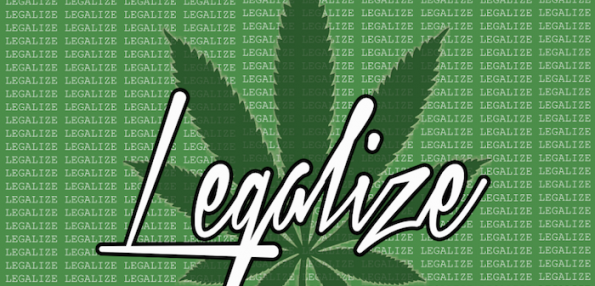
(https://www.marijuana.com/news/2015/07/massachusetts-campaign-to-legalize-marijuana-headed-up-by-heavy-hitters/)
[119] This refusal may be a censorship of freedom of expression in general, and not just of freedom of commercial expression (a concept that will be dealt with in Section V, infra). See Marc J. Randazza, Freedom of Expression and Morality Based Impediments to the Enforcement of Intellectual Property Rights, 16 Nev. L. J. 107, 123 (2016).
[120] See generally notes 107-117. Such as: PUSSY NATURAL ENERGY and NABUNDA (Portuguese for “In The Butt/Ass”) for beverages; DE PUTA MADRE (Spanish expression which may have an offensive character as PUTA and MADRE for Brazilians mean “whore” and “mother, in the sense of a professed nun,” respectively) for clothing articles and restaurant services; VAFFANCULO (Italian for “fuck off”) for jewelry and clocks; BRAZILIAN BITCH BEACH for entertainment services; FUCK-formative marks, like FUCKING FLY and MISTER FUCK for clothing articles, and DA FUCK for entertainment services; HOLOCAUSTHO MINISTÉRIO DE LOUVOR (“Holocaustho” refers to the Brazilian translation for “Holocaust”) for live presentations and entertainment services; 4I20 (reference to the 4:20pm time, which has a connection with the consumption of marijuana) for tissue paper; LEMON HAZE (which is a type of marijuana) for clothing articles; OCB SLIM ORGANIC HEMP for tobacco products; ILLICIT 55 (featuring the image of a man with a helmet in which the number 55 resembles the acronym SS of the Nazi army, and the helmet itself looks like a Nazi helmet); NATSI PAPER for paper and packages; IN’ OMERTÀ 9.15 M.C AGERE NON LOQUI (being “In’ Omertà” a rule or code that prohibits speaking or divulging information about criminal activities) for the manufacture of clothes and entertainment services; among others. See id.
[121] Serial Numbers 821586254, 821586262 and 821586270.
[122] Serial Number 819287563.
[123] Serial Number 825638593.
[124] Alcoholic liquor distilled from fermented sugar cane, a typical product from Brazil.
[125] In fact, the owner of this mark had filed another application for AGUARDENTE DE CANA MALTADA DU PIRU featuring a design of a turkey. Also, the INPI accepted an application by another company for the mark HOT DOG DU PIRU featuring the design of a turkey and covering restaurant services.
[126] See Serial Numbers 826064027, 902308440 and 819149497.
[127] See Marc J. Randazza. Freedom of Expression and Morality-Based Impediments to the Enforcement of Intellectual Property Rights, 16 Nev. L.J. 107, 122 (2016) (describing use of expressions and its relation with products in regards to morality).
[128] See World Intellectual Property Organization [WIPO], Andean Community Decisino No. 486 Establishing the Common Industrial Property Regime, at 135, WIPO Doc. 486 (Sep. 14, 2000). The morality restriction regarding trademarks that applies to Peru is detailed in article 135 of Decision 486, which establishes the IP provisions for the Andean Community of Nations’ Common Regime of Industrial Property. Id. It reads as follows: “Art. 135 – Those signs may not be registered as marks that are contrary to law, morality, public policy or proper practice.” Id.
[129] See applications for the marks PEACE AND LOVE!!! TRIP (Serial No. 828849080), REGGAE IN BAHIA (Serial No. 819756482), BIOFORM IMPLANTE (Serial No. 823243729) and CATUABA EXÓTICA (Serial No. 821467450).
[130] See INDECOPI Resolution Nº 002226 -2011/CSD-INDECOPI., case “A ADULT EDUCATION”. See also Commercialization of Products 2011, c. 226 (Pe.).
[131] See id.
[132] See Resolution No. 002226 -2011/ CSD-INDECOPI – EL PEZWEON.
[133] See Asihablamos.com, Weon: Meaning of Weon in Latin America, here (last visited Mar. 9, 2017) (defining Weon in Spanish language).
[134] See Resolution No. 002226 -2011/ CSD-INDECOPI – EL PEZWEON
[135] See id.
[136] See Title N. 1150-2008.
[137] See Resolution No. 002226 -2011/ CSD-INDECOPI – EL PEZWEON.
[138] See El Pezweon, Facebook,here
[139] See Cesar Alexis Prieto Rojas, Cuestionando las cláusulas de moralidad en el Derecho Peruano: especiales consideraciones en torno al Derecho de Marcas y el Derecho de la Publicidad [Questioning the Clauses of Morality in Peruvian Law: Special Considerations About the Law of Trademarks and the Right of Advertising], 107-115 (2013) (noting that several trademarks using the word “carajo” were denied for being offensive).
[140] Id. (acknowledging multiple interpretations of “carajo”).
[141] See The Free Dictionary, Carajo,here (last visited March 8, 2017) (defining carajo as vulgar expression or “swear word”).
[142] Id. (noting carajo is vulgar).
[143] As will be further mentioned, the INDECOPI had later accepted an application for PEÑA DEL CARAJO! JUERGA PERUANA.; See also Rojas, supra note 141.
[144] See Rojas, supra note 141 at 107. Thesis presented before the Pontificia Universidad Católica del Perú. 2013. Id.
[145] See Resolution No. 7092-2009/DSD-INDECOPI – TACACHANDO
[146] See Resolution No. 2132-2007/TPI-INDECOPI of October 25, 2007-JIJUNA. The case of the mark LOS JIJUNA covering class 41 services. Id. INDECOPI stated that, even though the term does not have a specific significance in other Spanish-speaking countries, in Peru it means “son of a bitch”. Id. This is a good example of the importance of regionalisms in language. Id. Most South American countries use Spanish as their main language, but regionalisms from each country must be accounted for when assessing the (im)moral character of a mark. Id. As mentioned in Section III above, the offensiveness of a mark should be verified in the territory of the country where protection is claimed. Id.
[147] See Resolution No. 2133-2007/TPI-INDECOPI of October 25, 2007- DEL CARAJO. By the time this application was examined, the INDECOPI had already rejected three applications for CARAJO-formative marks. Id. In this case, the INDECOPI also acknowledged that the word CARAJO may have offensive and non-offensive meanings, but, in view of the services covered (entertainment services), there should be no offensiveness for the public. Id.
[148] See id. The first instance of INDECOPI denying registration for this mark was based on the fact that the word “Stupid” is very similar to the Spanish term “Estúpida,” which is an insulting expression meaning “stubborn, lacking intelligence,” as per the definition of the Real Academia Española dictionary. Id. However, upon examining the appeal filed by the applicant, the court stated that an immoral sign should not be confused with a distasteful one (as mentioned in the TINY PENIS, HEADFUCK and READY TO FUCK cases described in chapter 3, supra) and, after reviewing different translations from the English language (according to which “Stupid” means “Foolish,” which is not usually considered offensive), it concluded that the allegedly offensive word does not have the same meaning as the similarly written word “Estúpida.” Id. In conclusion, the tribunal revoked the first instance decision and granted the trademark. Id.
[149] See Rojas, supra note 141. The morality restriction mentioned in relation to Peru. Id. See also Subregional Integration Agreement, Decision 486—Common Provisions on Industrial Property, available here (2000). It also applies to Ecuador. Id. See Consolidation No. 2006-13 at Art. 195. The Ecuadorian Intellectual Property Law also contains a morality-based impediment, which reads as Art. 195 – “Signs may not be registered as trademarks where they:(…) (g) are contrary to law, morality, public policy or order public”. Id.
[150] For instance, the mark SEXO LIBRE (Spanish for “Free Sex”) for entertainment services was rejected by the first instance of the IP Office on the ground of lack of distinctiveness.
[151] IEPI Resolutions of cases “MAMA-ADITA” and “MIL-HUEVADAS” No. 112 and 544 respectively.
[152] See United States Patent and Trademark Office, Statement on the Trademark Trial and Appeal Board’s (TTAB) Decision in Blackhorse v. Pro Football, Inc., available here.
[153] Matal v. Tam, 137 S. Ct. 1744, 1747 (2017).
[154] See Pro-Football, Inc. v. Blackhorse, 112 F. Supp. 3d 439, 447 (E.D. Va. 2015).
[155] Matal v. Tam, 137 S. Ct. 1744, 1747 (2017).
[156] See Ecuador Demographic Profile 2016, IndexMundi.com, here (last visited March, 8 2017) The Afroecuadorian population constituted 7.2% of Ecuadorians in 2014. Id.
[157] IEPI (ECUADOR) pending case “CRUDO ECUADOR.”
[158] See Registro Oficial, Orogano Del Globierno Del Ecuador, (Jun. 25, 2013), available here (discussing commication laws) .
[159] See id. (discussing media lynching). “Media lynching” means, according to the Communication Law, “the diffusion of information […] with the purpose of discrediting a person or entity.” Id.
[160] The author Alysa Arcos worked on the case during her time working in IEPI.
[161] See Law on Trademarks, Law No. 22, 362 (Jan. 2, 1981), available here. The morality restriction regarding trademarks in the Argentinian Trademark Law reads as follows:
Art. 3 – The following may not be registered:”(…) (e) Words, drawings and other signs that are contrary to morality and decency; Id.
[162] See Ellmann, “‘Billy Boy’ Ruled Not Obscene” available here (Jan. 18 2010).
[163] INPI Direccion de Marcas – ACTA 2177906
[164] INPI Direccion de Marcas – ACTA 2036575
[165] INPI Direccion de Marcas – ACTA 2018165. Trademark rejected for supposedly inciting hatred towards policemen. Id.
[166] INPI Direccion de Marcas – ACTA 2639748. As mentioned in relation to the CARAJO-formative marks in Peru, this term may have an offensive and a non-offensive character. Id. It can be used as a term of displeasure or nuisance, but also as an indication of something special or interesting (something that would be referred to as “Del Carajo”) or even as a way to express an idea of intensity. Id.
[167] INPI Direccion de Marcas – ACTA 2727800
[168] INPI Bulletin. Issue of 27/01/10.
[169]See Buenos Aires, un paraiso en Latinoamerica para turismo gay, Elomundos.es (March 3, 2011) available here.
[170] Resolution of March 2010, Case No.191/2001, MAPA GMBH GUMMI UND PLASTIKWERKE vs. INPI, Camara Nacional de Apelaciones en lo Civil y Comercial Federal. See also supra note 166.
[171] Id.
[172] Id.
[173] Id.
[174] Id.
[175] See Section III above.
[176] Article 135 of Decision 486 of the Andean Community of Nations’ Common Regime of Industrial Property. See supra note 130 and accompanying text.
[177] See Narcos: The Incredible Life of Pablo Escobar, Gq Magazine (September 29, 2015) available here.
[178] Brian Warner, The 20 Richest Drug Dealers of All Time, here (March 21, 2014).
[179] See Mi Patente, Registro del Marca “Pablo Emilio Escobar Gaviria” es Aprobado En 2010, available here (January 16, 2016).
[180] SIC Decision nº 53907, of September 9, 2013.
[181] Id.
[182] See SIC Trademark Application Serial No. 05 045458.
[183] Id.
[184] In fact, in 2010 Escobar’s widow and sons filed an application for PABLO EMILIO ESCOBAR GAVIRIA covering clothing articles, shoes and headgear in class 25. Surprisingly, this application was accepted by the SIC and matured into registration (it will remain valid until September 28, 2020). SIC Trademark Application Serial No. 10 045437.
[185] See SIC Trademark Application Serial No. 08 097011; see also SIC Trademark Application Serial No. 08 097005; SIC Trademark Application Serial No. 08 097008 (CRISTO REY); and SIC Trademark Application Serial No. 02 006156 (DIVINO NIÑO).
[186] See SIC Trademark Application Serial No. 08 097011, supra note 184.
[187] See SIC Trademark Application Serial No. 08 097011, supra note 184; see also SIC Trademark Application Serial No. 08 097005, supra note 184; SIC Trademark Application Serial No. 08 097008, supra note 184.
[188] See SIC Trademark Application Serial No. 08 097008, supra note 184.
[189] Id. This reasoning is similar to the one used in the 1930s case of the mark MADONNA for wines in the United States. See also In re McGinley, 660 F.2d 481, 483 (C.C.P.A. 1981).
[190] It should be noted that this same mark was rejected in Brazil. See supra note 121.
[191] The morality restriction regarding trademarks in the Chilean Industrial Property Law (Law No.17.336) reads as follows: “The following may not be registered as trademarks: k) The marks contrary to public order, morality or standards of respectability, including the principles of loyal competition and commercial ethics”. See Ministry of Econ., Revised, Coordinated & Systematized Text of the Industrial Property Law, NLCC Doc. 250708, Art. 20 sec. (k) (adopted Jan. 26, 2007) available here.
[192] See Resolution No. 860449; See also Resolution No. 752300; Resolution No. 1187054; Resolution No1032703. As mentioned in relation to the CARAJO-formative marks in Peru, this term may have an offensive and a non-offensive character. It can be used as a term of displeasure or nuisance, but also as an indication of something special or interesting (something that would be referred to as “Del Carajo”) or even as a way to express an idea of intensity.
[193] See INAPI Trademark Application Serial No. 1144465; see also SIC Trademark Application Serial No. 1144466.
[194] See Resolution No. 1182004. The phrase VAMOS CHILE MIERDA can be translated as “Go Chile, Damn It!.” It has the same meaning of the aforementioned Peruvian phrase “Viva El Perú Carajo,” i.e. it is used by a great section of the population as a way to express pride in being a Chilean national.
[195] See Resolution No. 884442.
[196] See Resolution No. 703721; See aslo Resolution No.703722; Resolution No. 786458.
[197] There were three applications for EL REY DE LOS HUEVONES and they were accepted in 2004 and 2007. However, it is important to note that the INAPI had previously rejected applications for EL POLLO HUEVON (Spanish for “The Idiot/Moron Chicken”) covering food services based on the morality impediment. These decisions were issued in 1997 and one may conclude that granting registration for EL REY DE LOS HUEVONES represented a shift in the INAPI’s understanding over the word HUEVON.
[198] See Resolution No. 1190604; see also INAPI Trademark Application Serial No. 1054368. “DE PUTA MADRE” is a Spanish expression, which may have an offensive character, since PUTA means “whore” and MADRE can mean “mother” or “a professed nun”. However, in Spain, for instance, the expression means “really cool”.
[199] See Resolution No. 1179426; See also Resolution No. 1179402.
[200] See INAPI Trademark Application Serial No. 441607.
[201] See Resolution No. 886453.
[202] See INAPI Trademark Application Serial No. 994256.
[203] See Resolution No. 223817.
[204] See Resolution No. 1042405.
[205] See INAPI Trademark Application Serial No. 1145871.
[206] The word MIERDA here has a clear offensive character, unlike the previously mentioned MIERDA-formative marks.
[207] See Resolution No. 508503; see also 1144006.
[208] See Resolution No. 1018877.
[209] See INAPI, Ministry of Econ., Promotion, & Tourism, Application Proceeding for Trademarks, available here.
[210] Except for the 1997 refusals of EL POLLO HUEVON, See Ricolfi, infra note 234.
[211] See INAPI Trademark Application Serial No. 918449; see also INAPI Trademark Application Serial No. 918450.
[212] See INAPI Trademark Application. Serial No. 799513.
[213] See INAPI Trademark Application. Serial No. 591564.
[214] See INAPI Trademark Application. Serial No. 329142.
[215] Such as CANA BIS, CANNABIS EN TU PIEL in class 03 (Application No. 1029979), CANNABIS in classes 30 (Application No. 1134016) and 32 (Application No. 977858), CHILE CANNABIS in class 35 (Application No. 1063610) and EXPOCANNABIS in class 41 (Application No. 1132815).
[216] See, e.g., In re McGinley, 660 F.2d 481, 484 (C.C.P.A. 1981) (stating “it is clear that the PTO’s refusal to register appellant’s mark does not affect his right to sue it). No conduct is proscribed, and no tangible form of expression is suppressed. Consequently, appellant’s First Amendment rights would not be abridged by the refusal to register the mark” (citations omitted). Id.
[217] See also In re Fox, 702 F.3d 633, 635 (Fed. Cir. 2012); In re Mavety Media Grp. Ltd., 33 F.3d 1367, 1374 (Fed. Cir. 1994); see also Ghazilian’s Application [2002] E.T.M.R. 57, ¶ 18 (Lord Chancellor’s Appointed Person) (Nov. 28, 2001); Masterman’s Design Application, [1991] R.P.C. 89, 91 (In the Registered Designs Appeal Tribunal) (June 27, 1991).
[218] See Mary LaFrance, Passing Off and Unfair Competition: Conflict and Convergence in Competition Law, 2011 Mich. St. L. Rev. 1413, 1422 (2011).
[219] Burger King of Fla., Inc. v. Hoots, 403 F.2d 904, 906 (1968). “Defendants did not acquire the exclusive right they would have acquired by their Illinois registration had they actually used the mark throughout Illinois prior to plaintiffs’ federal registration”. Id.
[220] Id.
[221] See 15 U.S.C. § 1115(a) Additionally, registration of a mark in the United States provides prima facie evidence of the validity of the mark. See id. at § 1115(b). And if the mark is registered for five years and becomes incontestable, other potential users of the mark lose several defenses to trademark infringement claims. Id.
[222] See Alberto Alemanno & Enrico Bonadio, Do You Mind My Smoking? Plain Packaging of Cigarettes Under the TRIPS Agreement, 10 J. Marshall Rev. Intell. Prop. L. 450, 467 (2011).
[223] See Id.
[224] See Paris Convention, supra note 2 at Art. 10bis.
[225] See Alemanno & Bonadio, supra note 226 at 469 (stating problem with use of trademark).
[226] See Paris Convention, supra note 2 at Art. 10bis.
[227] See Id.
[228] See Matal v. Tam, 137 S. Ct. 1744, 1747 (2017) (“Federal registration of trademarks confers important legal rights and benefits on trademark owners who register their marks”). Pursuant to 15 U.S.C.S. §1115, the holder of a federal trademark has a right to exclusive nationwide use of that mark where there was no prior use by others. Registration is constructive claim of ownership per 15 U.S. Code § 1072. See also Burger King of Fla., Inc. v. Hoots, 403 F.2d 904, 906 (1968) (Unregistered trademarks are only protected within its geographic trading area).
[229] See supra note 22.
[230] M. Ricolfi, Trademarks and Human Rights 470 (L.C. Torremans, Paul (ed.) Intellectual Property and Human Rights. Kluwer Law International. 2008.)
[231] See In re McGinley, 660 F.2d 481 (C.C.P.A. 1981).
[232] See Marc J. Randazza, Freedom of Expression and Morality Based Impediments to the Enforcement of Intellectual Property Rights, 16 Nev. L.J. 107, 125 (2016) (generalizing Randazza’s dissent). Generally speaking, Randazza dissents from this view. Id.
[233] See Enrico Bonadio, Brands, Morality and Public Policy: Some Reflections on the Band on Registration of Controversial Trademarks, 19 Marq. Intell. Prop. L. Rev. 39, 52 (2015).
[234] See supra 57 at 340 (2011).
[235] See Id.
[236] See Matal v. Tam, 137 S. Ct. 1744, 1747 (2017), affirming In re Tam, 808 F.3d 1321, 1344-1345 (Fed. Cir. 2015).
[237] See In re Tam, 808 F.3d 1321, 1340-1345 (Fed. Cir. 2015).
[238] See id.
[239] See Garcia, supra note 57 at 340 (2011).
[240] See id.
[241] See id.
[242] See Alfredo Lindley-Russo, Cuestionado la existencia de la prohibición absoluta de registro de marcas contrarias a la ley, la moral, el orden público o las buenas costumbres, Anuario Andino De Derechos Intelectuales 237, 267 (2013) available here.
[243] See Matal v. Tam, 137 S. Ct. 1744, 1747 (2017).
[244] See In re Tam, 808 F.3d 1321,1355-56 (Fed. Cir. 2015).
[245] Matal v. Tam, 137 S. Ct. 1744, 1747 (2017).
[246] Lauren Behr, Trademarks for the Cure: Why Nonprofits Need Their Own Set of Trademark Rules, 54 B.C.L. Rev. 243, 248 (2013). The registration secures the owner’s rights in the mark, and it is unlikely a business would invest time, effort, and money in a trademark that may not guarantee a return on its investments. Id.
[247] See Marco Ricolfi, Intellectual Property Law and Human Rights 451 (Paul L.C. Torremans ed., 3rd ed. 2015). “[B]rands may convey – and do convey – not only messages about the origin of the goods and their quality but also other messages, about lifestyles, values, attitudes towards society and the like.” Id. See also Bonadio, supra note 22 at 55 (explaining that information is provided to customers). “Brands definitely provide current and potential customers with useful information that enable them to make educated purchase choices.” Id.
[248] See Garcia, supra note 57, at 340; See also Lindley-Russo, supra note 57.
[249] See Garcia, supra note 57, at 340.
[250] See generally, J. Griffiths, Is there a Right to an Immoral Trademark?, Queen Mary, University of London available here. See also Ricolfi, supra note 234; Bonadio, supra note 22, at 55, Randazza, supra note 54, at 107; Council of Europe, European Convention for the Protection of Human Rights and Fundamental Freedoms, as amended by Protocols Nos. 11 and 14, November 4, 1950, ETS 5, 213 U.N.T.S 221[hereinafter ECHR].
[251] See generally David Bollier, Brand Name Bullies: The Quest to Own and Control Culture (1st ed. 2005); and see generally Kembrew Mcleod, Freedom of Expression®: Overzealous Copyright Bozos and Other Enemies of Creativity (1st ed. 2005); Rochelle Cooper Dreyfuss, Expressive Genericity: Trademarks as Language in the Pepsi Generation, 65 Notre Dame L. Rev. 397 (1990); Alex Kozinski, Trademarks Unplugged, 68 N.Y.U. L. Rev. 960 (1993); Mark A. Lemley, The Modern Lanham Act and the Death of Common Sense, 108 Yale L.J. 1687 (1999); Jessica Litman, Breakfast with Batman: The Public Interest in the Advertising Age, 108 Yale L.J. 1717 (1999).
[252] See ECHR, supra note 255. Article 10 of the ECHR protects freedom of expression, and has been interpreted to impact the rights of mark holders. Id. Moreover, Article 1, Protocol No. 1, of the ECHR is interpreted as conferring a human rights element to negative effects on property, including trademark registrations. See Anheuser-Busch Inc. v. Portugal, 45 Eur. Ct. H.R. 36, 46 (2007); See also ECHR, supra note 255, at art. 10, §1. “Everyone has the right to freedom of expression.” Id. “This right shall include freedom to hold opinions and to receive and impart information and ideas without interference by public authority and regardless of frontiers.” Id. “This Article shall not prevent States from requiring the licensing of broadcasting, television or cinema enterprises.” Id.
[253] See Matal v. Tam, 137 S. Ct. 1744, 1747 (2017).
[254] See e.g., S. Afr. Const., 1996. This article protects freedom of expression in its first subsection and Section 16(2) excludes “propaganda for war”, “incitement of imminent violence” and “advocacy of hatred that is based on race, ethnicity, gender or religion, and that constitutes incitement to cause harm.” Id. Singapore has enacted the Sedition Act, which prohibits seditious acts and speech, and the printing, publication, sale, distribution, reproduction, and importation of seditious publications. See also Sedition Act, ch. 290 (Sing. 1948). The act criminalizes actions which “promote feelings of ill-will and hostility between different races or classes of the population of Singapore.” Id. at § 3(1)(e). Two recent and notable cases involving the restriction of hate speech, Public Prosecutor v. Koh Song Huat Benjamin and Public Prosecutor v. Ong Kian Cheong, were centered around acts and publications that promoted hostility between different races and religions. See Public Prosecutor v. Koh Song Huat Benjamin, [2005] S.G.D.C. 272 (Sing.). Here, the acts in question were the posting of insulting and derogatory anti-Malay and anti-Muslim remarks on the Internet. Id. See also Public Prosecutor v. Ong Kian Cheong, [2009] S.G.D.C. 163 (Sing.). Here, the accused persons were convicted of distributing evangelical tracts that promoted Protestant Christianity and disparaged Islam, and which were described as a “pointed attack by one religion on another.” Id. These cases indicate that in Singapore, freedom of speech is not a primary right, but is qualified by public order considerations couched in terms of racial and religious harmony. Id. See also, Martha C. Nussbaum, Constitutions and Capabilities: “Perception” Against Lofty Formalism, 121 Harv. L. Rev. 4, 7 (2007).
[255] See supra Part IV (B).
[256] See supra Part IV (B) (discussing PEZWEON character as copyrighted work).
[257] Miguel Morachimo, Indecopi Le Dijo No Al Pezweon, Nuevamente, Blawyer.org (Feb. 24, 2010) available here.
[258] Cámara Nacional de Apelaciones en lo Civil y Comercial Federal (Argentina) Resolution of March 2010, Case No.191/2001, MAPA GMBH GUMMI UND PLASTIKWERKE vs. INPI.
[259] See id. (illustrating Justice Ricardo Víctor Guarinoni’s adherence to the decision).
[260] See id.
[261] In the European Union, notions of morality change depending on the relevant marketplace. For example, in the “SCREW YOU” case, the Grand Board considered the mark to be acceptable for sex toys, but not mundane products. See Case R 495/2005-G, Application of Jebraj Kenneth (trading as Screw You), 2007 E.T.M.R. 7, ¶ 14.
[262] See id. at ¶ 21.
[263] Id.
[264] See In re Engine 15 Brewing Co., LLC, No. 86038803, at 8-9 (T.T.A.B. 2015), available here.
[265] See id.
[266] Marc J. Randazza, Freedom of Expression and Morality-Based Impediments to the Enforcement of Intellectual Property Rights, 16 Nev. L.J. 107, 122 (2015).
[267] Tanya Katerí Hernández, Hate Speech and The Language of Racism in Latin America: A Lens for Reconsidering Global Hate Speech Restrictions and Legislation Models, 32 U. Pa. J. Int’l L. 805, 807 (2011).
[268] “Hate speech” is defined as speech that offends, threatens, or insults groups, based on race, color, religion, national origin, sexual orientation, disability, or other traits. See Hate Speech, Dictionary.com, available here(last visited March 24, 2017) (defining “hate speech”). However, the authors of this paper recognize that there are many different definitions of what constitutes hate, and what constitutes hate speech is highly subjective. Id.
[269] See Hernández, supra note 272, at 807.
[270] See R.A.V. v. City of St. Paul, Minn., 505 U.S. 377 (1992).
[271] See Nat’l Socialist Party of America et al. v. Village of Skokie, 432 U.S. 43 (1977) (holding First Amendment does not permit government to impose special prohibitions on speakers of disfavored subjects).
[272] See e.g., Constituição Federal [C.F.] [BRAZILIAN Constitution] art. 5. available here. In Brazil, according to the 1988 Brazilian Constitution, racism and other forms of race-related hate speech are “imprescriptible crime(s) with no right to bail to its accused.” The Council of Europe has worked intensively on this issue. While Article 10 of the European Convention on Human Rights does not prohibit criminal laws against revisionism, such as denial or minimization of genocides or crimes against humanity, as interpreted by the European Court of Human Rights (Eur. Ct. H.R.), the Committee of Ministers of the Council of Europe went further and recommended to member governments to combat hate speech under its Recommendation R (97) 20. “The [Eur. Ct. H.R.] does not offer an accepted definition for ‘hate speech’ but instead offers only parameters by which prosecutors can decide if the ‘hate speech’ is entitled to the protection of freedom of speech.” See Alina Sharon, A Web of Hate: European, U.S. Laws Clash on Defining and Policing Online Anti-Semitism, Algemeiner Journal, available here (last visited Feb. 28, 2013). The Council of Europe also created the European Commission against Racism and Intolerance, which has produced country reports and several general policy recommendations, for instance against anti-Semitism and intolerance against Muslims. Singapore has passed numerous laws that prohibit speech that causes disharmony among various religious groups. The Maintenance of Religious Harmony Act is an example of such legislation. The Penal Code criminalizes the deliberate promotion by someone of enmity, hatred or ill-will between different racial and religious groups on grounds of race or religion. It also makes it an offence for anyone to deliberately wound the religious or racial feelings of any person. See Maintenance of Religious Harmony Act, § 8(1), ch. 167A, (Sing. 2001 Rev. Ed.).
[273] Interview by Melissa Block with Carles Asher Small, Founder, Yale Initiative for the Interdisciplinary Study of Anti-Semitism, on National Public Radio (Mar. 3, 2011), available here; see also Eugene Volokh, No, There is No “Hate Speech” Exception to the First Amendment, The Washington Post (May 7, 2015), available here.
[274] Hernández, supra note 272, at 813.
[275] Stephanie Farrior, Molding the Matrix: The Historical and Theoretical Foundations of International Law Concerning Hate Speech, 14 Berkeley J. Int’l L. 1, 4 (1996).
[276] See Elizabeth Nolan Brown, How Hate Speech Laws Work In Practice, Reason.com (Oct. 20, 2015), available here.
[277] See Gilson LaLonde & Gilson, supra note 8, at 1489-1490.
[278] See Farrior, supra note 280, at 27-30. “Hate Speech” regulations have the potential to be used in an abusive manner, a position advanced even in early debates at the U.N. Commission on Human Rights. Id. During debate, Eleanor Roosevelt noted that “any criticism of public or religious authorities might all too easily be described as incitement to hatred and consequently prohibited.” Id. at 27 (citing U.N. commission on Human Rights). U.N. Doc.E/CN 4/STR. 174 (8 May 1950) at 6.
[279] See Farrior, supra note 280, at 8-14; see also G.A. Res. 2200A (XXI), arts. 18-19 (Dec. 16, 1966) [hereinafter International Covenant on Civil and Political Rights].
[280]G.A. Res. 260A (III) (Dec. 9, 1948) [hereinafter Convention on Prevention and Punishment of Crime of Genocide].
[281] Id. at arts. I, IV.
[282]International Covenant on Civil and Political Rights, supra note 284, at arts. 18-19.
[283] Id. at art. 20, §2.
[284] See Matal v. Tam, 137 S. Ct. 1744, 1747 (2017)(holding that the exclusion of “disparaging” marks violated the First Amendment, although some may consider them “offensive”); see also Randazza, supra note 271, at 117-18. “Trademark registration is designed to provide government benefits to trademark registrants. Id. at 117. “As a viewpoint-based restriction on protected speech, Section 2(a) [of the United States’ Lanham Act] violates this doctrine.” Id. at 118. “After decades of frustration, the First Amendment argument against Section 2(a) finally prevailed . . . .” Id.
[285] See Ian Shapira, Federal Judge Orders Cancellation of Redskins’ Trademark Registrations, Washington Post (July 8, 2015), available here. For example, many Americans applauded the cancellation of the Washington Redskins’ trademarks. Id.
[286] See In re Richard Hines Request for Reconsideration, 32 U.S.P.Q.2d (BNA) 1376 (T.T.A.B. 1994) (publishing the mark “BUDDHA BEACHWEAR” for opposition, allowing members of the Buddhist religion to oppose the mark on the grounds that it was “imperative that the board be careful to avoid interposing its own judgment for that of Buddhists”).
[287] See Cohen v. California, 403 U.S. 15, 22-23 (1971).
[288] Farley, supra note 21, at 1, 22.
[289] Id.
[290] Id. at 21.
[291] Id.
[292] Marc Randazza, Why Redskins Decision is Wrong, CNN (Jun. 21, 2014, 2:36 PM), here (discussing First Amendment issue that the trademark office should not necessarily be an arbiter of morality); see also Marc Randazza, Decision on Asian-American Band’s Name is Wrong, CNN (Apr. 23, 2015, 9:18 AM), here (Randazza says the court was wrong for initially upholding a trademark denial for Asian-American band called “The Slants” on grounds that name was disparaging because trademarks are commercial speech, protected by First Amendment).
[293] Law No. 9.279, May 14, 1996, Código de Propriedade Industrial [C.P.I.], Art. 124, Item III, of 15.05.1997 (Braz.).
[294] Trademark Office Practice – Grounds for Refusal, World Intellectual Property Organization, here.
[295] St. Peter, Catholic Online, here (last visited Mar. 17, 2016); see also St. Peter’s Fiesta, here (last visited Mar. 17, 2016) (website for St. Peter’s Fiesta, a five-day festival honoring patron saint of fisherman St. Peter. The festival is put on by the Italian American community of Gloucester, Massachusetts, Marc Randazza’s home town).
[296] See Brazilian Trademark Application Serial No. 905050851.
[297] See Censo Demográfico 2010, Instituto Brasileiro de Geografia e Estatítica 144, (2010), available here .
[298] Pro-Football, Inc. v. Blackhorse, 112 F.Supp.3d 439 (E.D. Va. 2015) (six registered trademarks to the Redskins name were cancelled in the United States on grounds that the marks are disparaging to native Americans, obviated by Matal v. Tam, 137 S. Ct. 1744, 1747 (2017) which affirmed that the disparagement clause of 15 U.S.C.S. § 1052(a) was unconstitutional); see also the earlier decision In re Tam, 808 F.3d 1321 (Fed. Cir. 2015) TTAB LEXIS 485 (Trademark Trial & App. Bd., Sept. 26, 2013) (trademark registration was refused as disparaging for “The Slants” to identify an Asian-American rock band, even though the term “slants” had a number of meanings, since the term as used likely referred to people of Asian descent and was likely viewed as offensive or an ethnic slur to a substantial composite of people of Asian descent); see also supra Part IV (C) (MENETRAS DEL NEGRO, translated into English as “The Black Guy’s Stew,” has surprisingly not been found to be disparaging to a specific group of people, and there is no notice of nullity actions to cancel this trademark).
[299] See Pollaud-Dulian, supra note 66, at 783.
ISSN 2509-5692


 Em recente julgado, a Ministra Nancy Andrighi decidiu questão envolvendo propaganda comparativa realizada pela empresa SPECTRUM Brands Brasil Indústria e Comércio de Bens de Consumo Ltda., que utilizou a marca DURACELL nas embalagens do produto RAYOVAC e em matérias publicitárias (REsp n. 1.668.550/RJ – Nº de registro no STJ 2014/0106347-0).
 O acórdão prolatado no REsp nº 1.484.975PR parece ter trazido importante inovação na apreciação da questão em tela, em que foi relatora a Ministra Nancy Andrighi (julgado em 1/12/2016 – v.u.).
 As empresas Apple and Pear Australia Limited (APAL) e Star Fruits Diffusion são cotitulares de diversas marcas comunitárias utilizadas no comércio voltadas a assinalar produtos da classe 31, especialmente maçãs e macieiras. Trata-se aqui das conhecidas maçãs “Pink Lady”.
 Em 2009 a empresa Belga Shoe Branding Europe apresentou ao Instituto de Harmonização do Mercado Interno (IHMI) um pedido de registro de marca para sapatos, caracterizado por duas tiras paralelas partindo da sola do calçado em direção ao tornozelo, como abaixo ilustrado.
 Desde 1956 a Autora comercializa na Alemanha sob a marca “Langenscheidt” dicionários bilingues, oferecendo-os ao mercado em versões impressa e eletrônica. Em 1986 ela iniciou com a comercialização de outros produtos didáticos voltados ao aprendizado de línguas estrangeiras, como cursos autodidáticos, gramáticas etc. Ocupando posição de liderança no mercado de dicionários bilingues, seus produtos são caracterizados por um fundo amarelo, sobre o qual destaca-se a letra “L” impressa em azul.

 Tendo tomado conhecimento de um recente julgado do Landgericht de Düsseldorf (14c O 304/12 U) sobre a questão das peças de reposição de automóveis protegidas por registro de desenho industrial, e aproveitando a ocasião para verificar o material já colectado sobre a matéria, voltei a ter em mãos um acórdão proferido pela High Court of Justice do Reino Unido, datado de meados de 2012. Se no âmbito legislativo a discussão referente à “questão das peças de reposição” está estagnada, o acórdão mencionado, escolhido para ser explorado na Seção de Jurisprudência Comentada deste periódico, demonstrará que os Tribunais dos países membros, pelo contrário, a tem bastante presente.